21 Day Fix Grocery List for Beginners (Make Shopping Easy & Stress-Free)
1. Introduction
If you’re just starting the 21 Day Fix, your first grocery trip can feel confusing fast. You walk into the store with good intentions but suddenly you’re stuck wondering, “What do I actually need to buy?”
Between labels, “healthy” options, and endless choices, it’s easy to overthink everything. And when that happens, most beginners either overspend or leave without a clear plan.
Here’s the good news: it doesn’t have to be complicated.
A simple, structured 21 Day Fix grocery list for beginners can take all that stress away. When you know exactly what to buy, shopping becomes faster, easier, and way more confident. This guide will walk you through everything step by step like a coach helping you through the store.
2. What Is the 21 Day Fix (Quick Beginner Overview)
The 21 Day Fix is a simple portion-based meal plan designed to help you eat balanced meals without strict calorie counting.
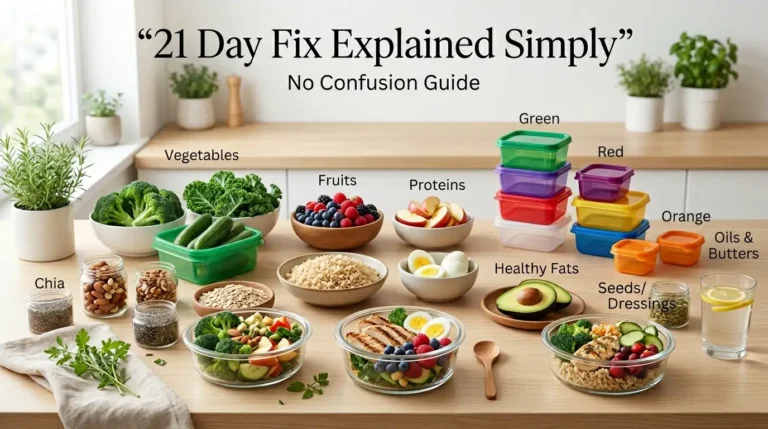
It uses color-coded containers to guide how much of each food group you should eat:
- Proteins (red)
- Vegetables (green)
- Fruits (purple)
- Carbs (yellow)
- Healthy fats (blue/orange)
Quick definition (featured snippet style):
The 21 Day Fix is a structured meal plan that uses portion control containers to balance proteins, carbs, fats, fruits, and vegetables over 21 days.
You don’t need to overcomplicate it just focus on balanced meals and consistent choices.
3. How to Use This Grocery List
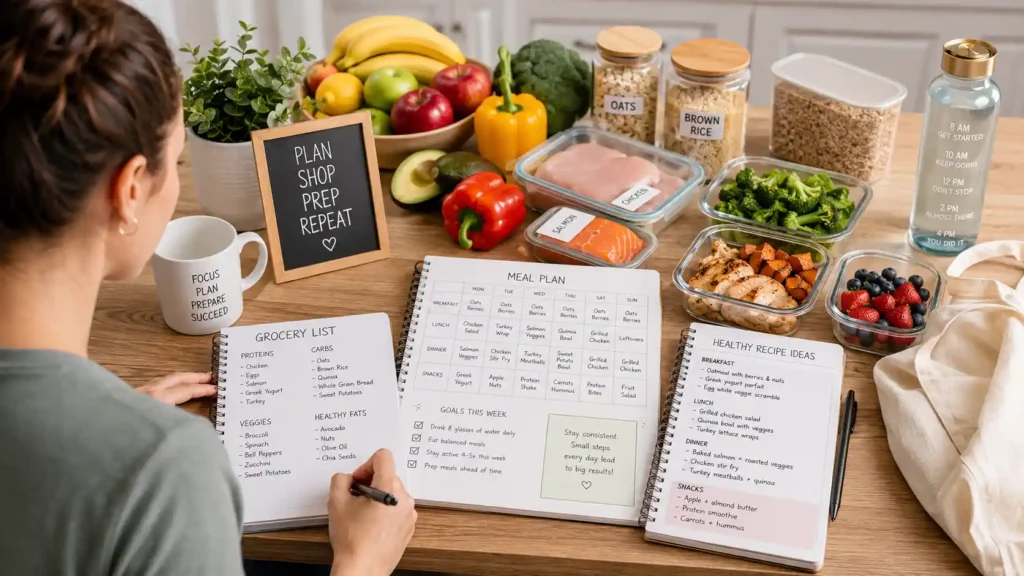
A simple way to make this easier is to shop by categories instead of random foods.
Here’s how to approach it:
- Pick a few foods from each category (not everything)
- Plan meals for 5–7 days before shopping
- Stick to simple, repeatable meals
If you’re just starting out, don’t aim for perfection. Aim for consistency.
This 21 Day Fix food list is designed to help you shop faster and avoid decision fatigue.
4. The Complete 21 Day Fix Grocery List For Beginners
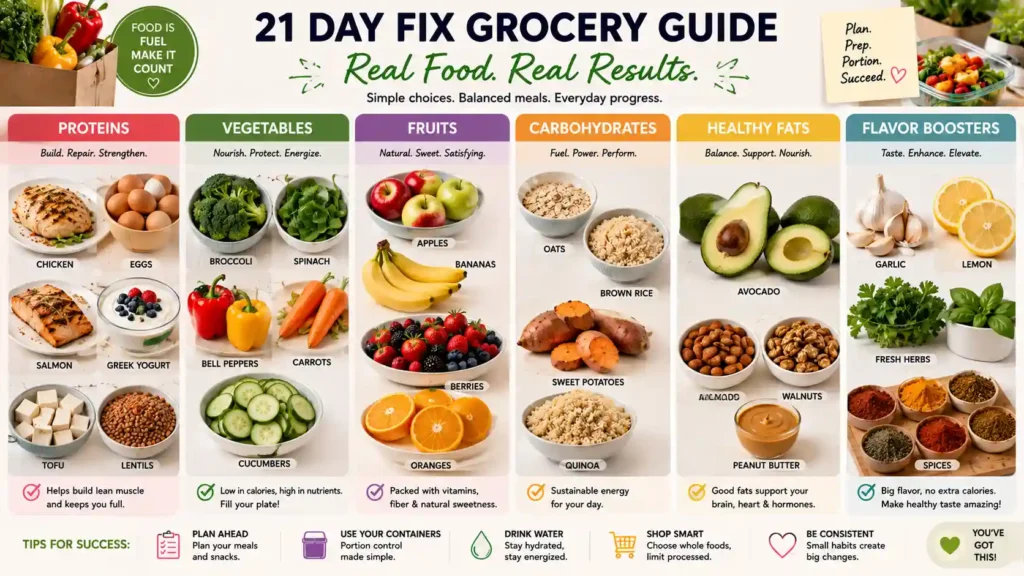
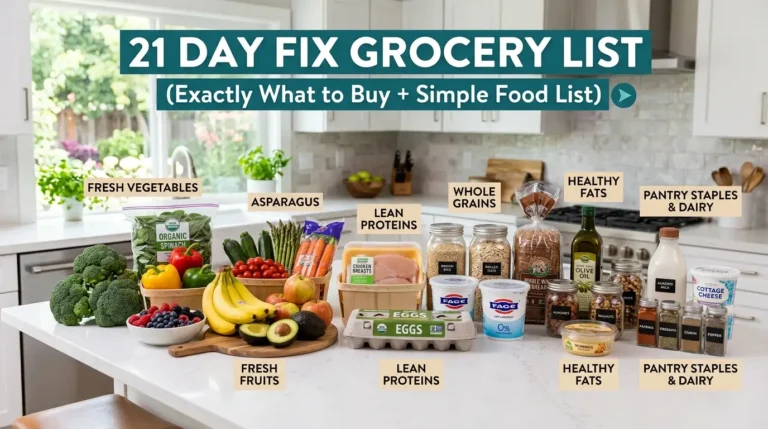
Below is your complete, beginner-friendly healthy grocery list for weight loss. Everything is simple, easy to find, and practical.
Proteins (Red Container)
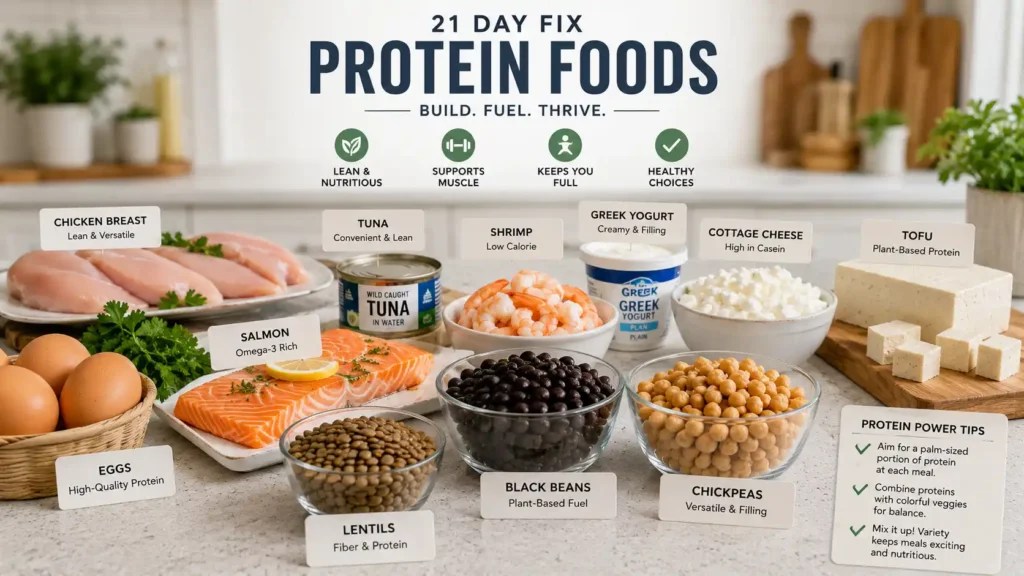
Protein helps keep you full and supports balanced meals throughout the day.
- Chicken breast
- Ground turkey
- Lean ground beef
- Eggs
- Egg whites
- Salmon
- Tuna (canned in water)
- Greek yogurt (plain)
- Cottage cheese
- Shrimp
- Tofu
- Tempeh
- Black beans
- Lentils
- Chickpeas
Helpful tip: Choose lean and simple options. Grill, bake, or pan-cook with minimal oil to keep things easy.
Vegetables (Green Container)
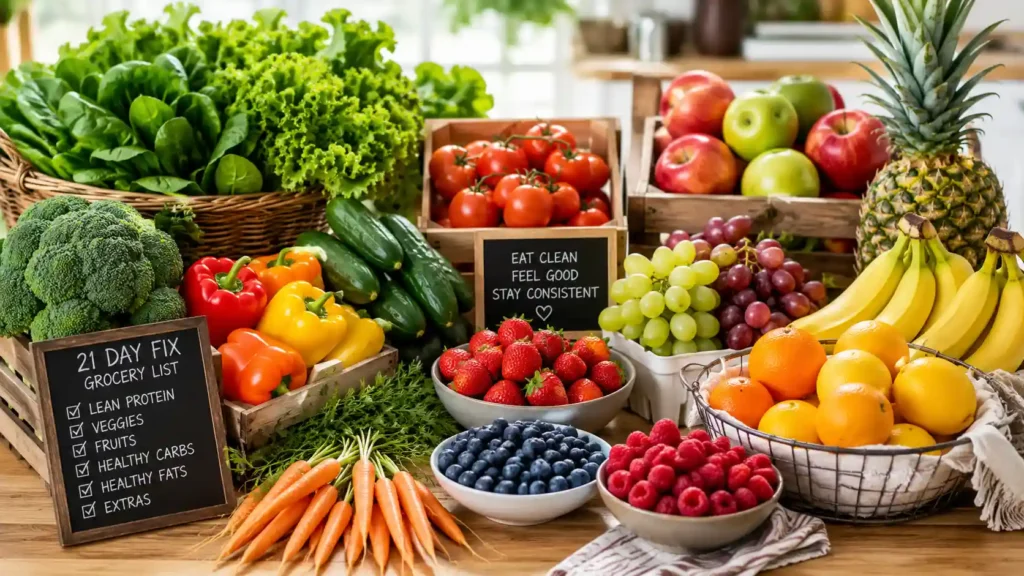
Vegetables add volume, nutrients, and help you feel satisfied without overthinking portions.
- Spinach
- Kale
- Lettuce
- Broccoli
- Cauliflower
- Zucchini
- Bell peppers
- Cucumbers
- Tomatoes
- Carrots
- Green beans
- Mushrooms
- Asparagus
Frozen options:
- Frozen broccoli
- Mixed vegetables
- Frozen spinach
Helpful tip: Fresh or frozen both work. Use what’s convenient and budget-friendly.
Fruits (Purple Container)
Fruits add natural sweetness and are easy to include in meals or snacks.
- Apples
- Bananas
- Strawberries
- Blueberries
- Raspberries
- Oranges
- Grapes
- Pineapple
- Mango
Helpful tip: Keep portions in mind and choose fruits you actually enjoy eating.
Carbohydrates (Yellow Container)
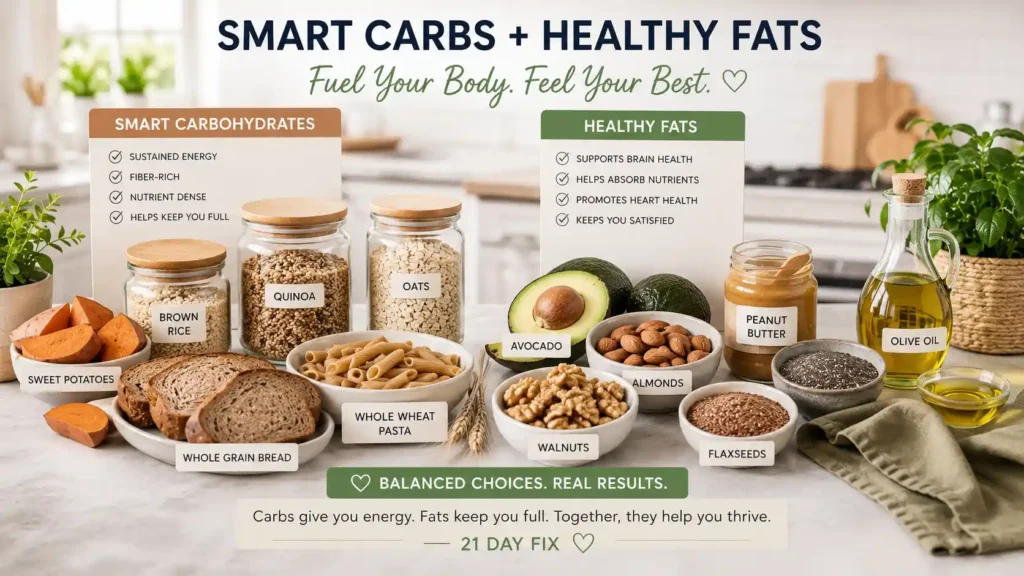
Carbs provide energy and help keep meals balanced.
- Brown rice
- Quinoa
- Oats
- Whole grain bread
- Whole wheat pasta
- Sweet potatoes
- White potatoes
- Corn
Helpful tip: Stick to whole, minimally processed carbs for better consistency.
Healthy Fats (Blue + Orange Containers)
Healthy fats improve flavor and help meals feel satisfying.
- Avocados
- Almonds
- Walnuts
- Cashews
- Peanut butter
- Almond butter
- Chia seeds
- Flaxseeds
- Olive oil
- Coconut oil
Helpful tip: A little goes a long way keep portions simple and controlled.
Extras & Flavor Boosters
These make your meals taste better without adding complexity.
- Garlic
- Lemon
- Onion
- Fresh herbs (parsley, cilantro)
- Dried spices (paprika, chili powder, Italian seasoning)
- Vinegar (apple cider, balsamic)
- Low-sodium soy sauce
- Mustard
- Hot sauce
Helpful tip: Flavor is what keeps you consistent don’t skip this category.
5. What to Avoid Buying
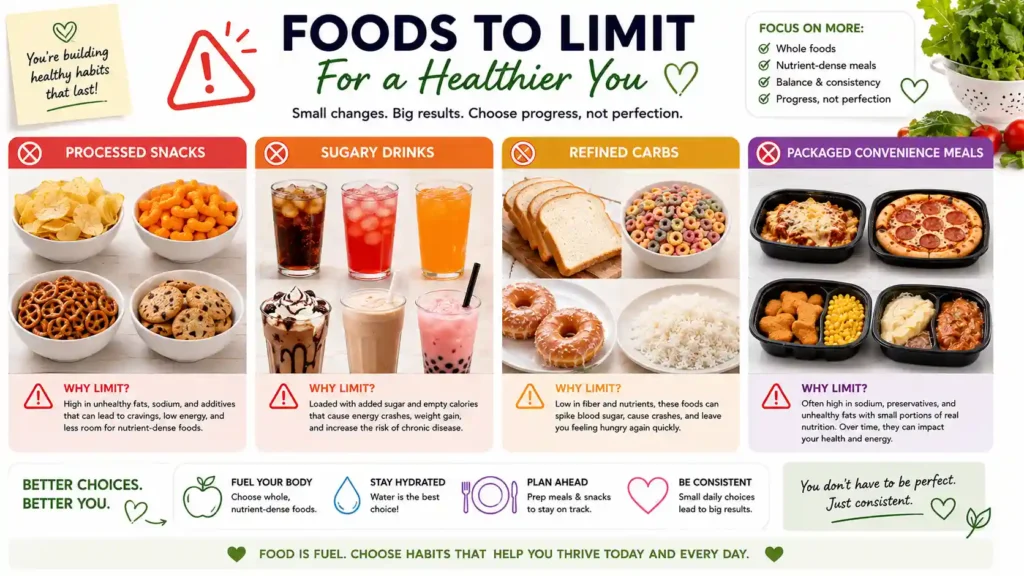
You don’t need to cut everything out but limiting certain items makes things easier.
- Processed snack foods
- Sugary drinks
- Refined carbs (white bread, pastries)
- High-sodium packaged meals
Simple mindset: If it’s overly processed or comes with a long ingredient list, keep it minimal.
6. Tips to Make Grocery Shopping Easier
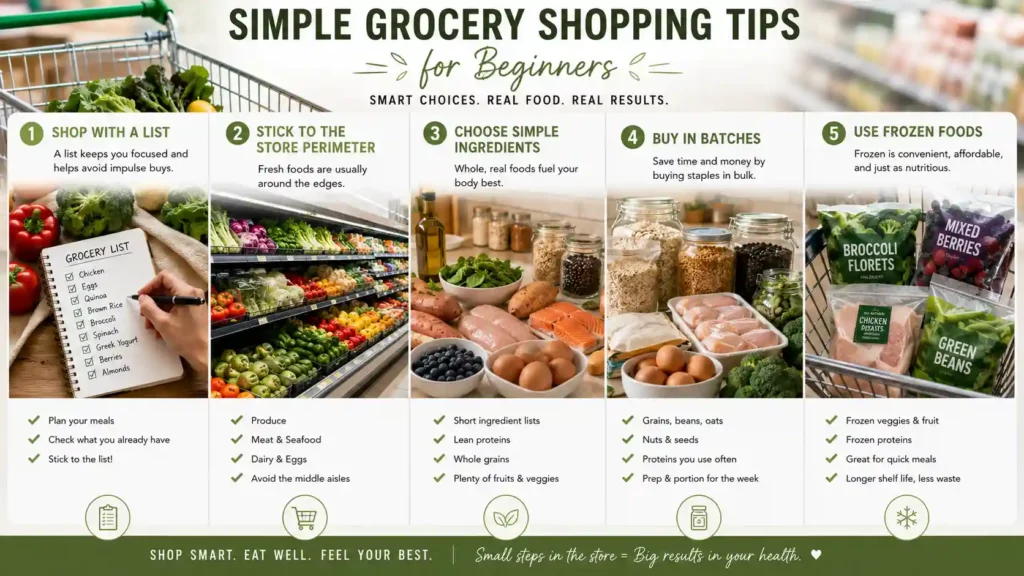
If you’re new, these small habits can make a big difference.
Shop with a list
Going in without a plan leads to confusion and impulse buys.
Stick to the store perimeter
Most whole foods (produce, protein, dairy) are around the edges.
Choose simple ingredients
The simpler the food, the easier it is to cook and repeat.
Buy in batches
Pick a few proteins, carbs, and vegetables you can mix and match.
Use frozen foods when needed
They save time, reduce waste, and are just as practical.
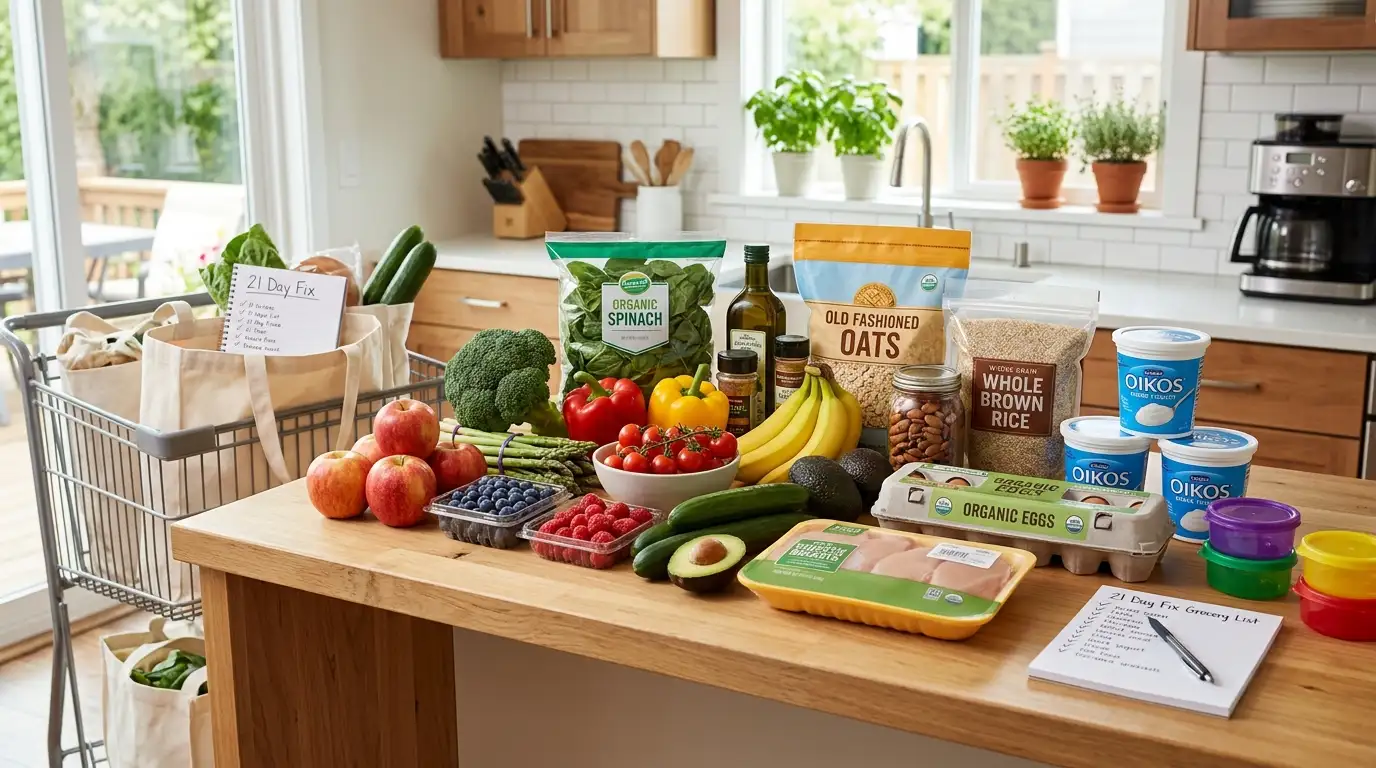
7. Sample 3-Day Grocery Plan (Beginner Friendly)
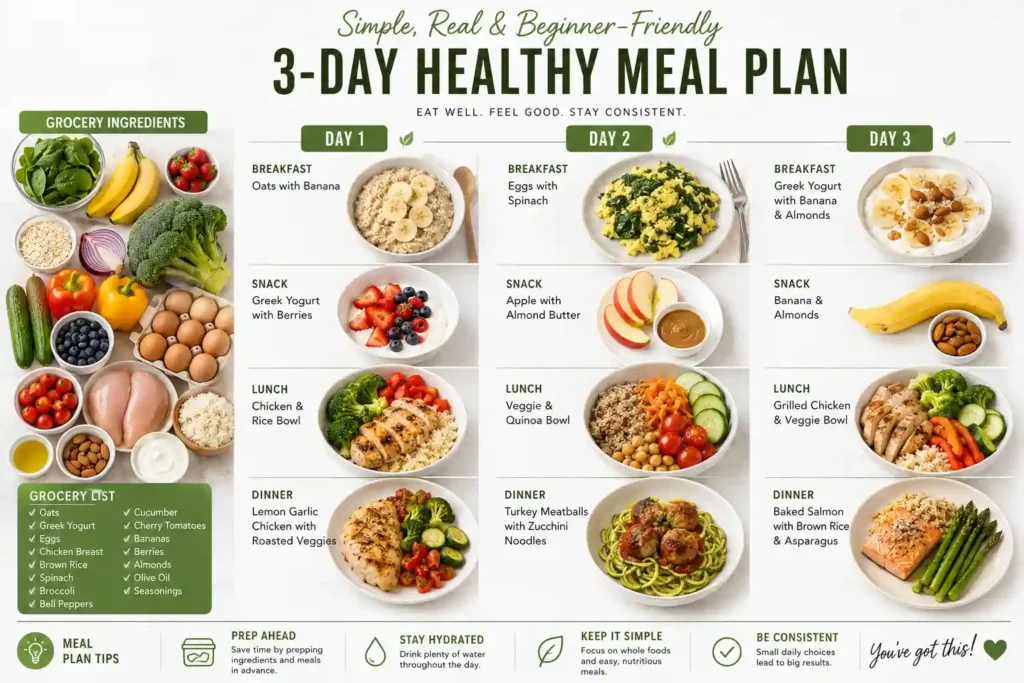
Here’s how your 21 Day Fix grocery list turns into real meals.
Shopping List for 3 Days:
- Chicken breast
- Eggs
- Greek yogurt
- Brown rice
- Oats
- Spinach
- Broccoli
- Bell peppers
- Apples
- Bananas
- Almonds
- Olive oil
Day 1:
- Breakfast: Oats with banana
- Lunch: Chicken, rice, and broccoli
- Dinner: Eggs with sautéed spinach
Day 2:
- Breakfast: Greek yogurt with apple
- Lunch: Chicken and vegetable bowl
- Dinner: Scrambled eggs with peppers
Day 3:
- Breakfast: Oats with fruit
- Lunch: Chicken salad with spinach
- Dinner: Rice with veggies and eggs
This is simple, repeatable, and easy to follow exactly what beginners need.
8. FAQs
What foods can you eat on 21 Day Fix?
You can eat lean proteins, vegetables, fruits, whole carbs, and healthy fats. The focus is on balance and portion control.
Can beginners follow this grocery list easily?
Yes. This list is designed specifically for beginners who want a simple and clear starting point.
Are frozen foods allowed?
Yes. Frozen vegetables and proteins are a convenient and budget-friendly option.
How often should I shop?
Most people shop once per week. You can also do a small mid-week trip for fresh items.
Do I need special foods for the 21 Day Fix?
No. This plan is based on everyday foods you can find in any grocery store.
9. Conclusion
Starting the 21 Day Fix doesn’t have to feel overwhelming especially when your grocery shopping is simple and clear.
With this 21 Day Fix grocery list for beginners, you know exactly what to buy, how to shop, and how to keep things stress-free. No guesswork. No overthinking.
Start with a few foods from each category, keep your meals simple, and build from there. The more consistent you are, the easier everything becomes.
If you’re just starting out, focus on your next grocery trip. That’s where real progress begins.
Related: 21 Day Fix Grocery List (Exactly What to Buy + Simple Food List) to simplify your shopping and set yourself up for success from day one.