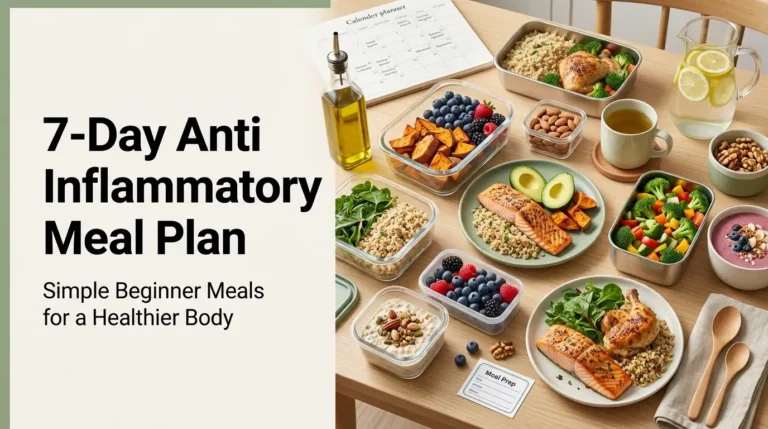
Anti-Inflammatory Diet for Weight Loss: 5-Day Meal Plan
1. Introduction
Many people today are searching for sustainable ways to improve their eating habits while also supporting healthy weight management. Instead of focusing on restrictive diets or quick fixes, more individuals are turning toward balanced eating patterns built around whole foods and nourishing ingredients.
One approach that has gained attention is the anti-inflammatory diet for weight loss. Rather than eliminating entire food groups, this style of eating emphasizes fresh vegetables, fruits, whole grains, lean proteins, and healthy fats while limiting heavily processed foods. The goal is to create meals that support overall wellness while providing balanced nutrition.
Another reason people find this approach appealing is its flexibility. Anti-inflammatory eating does not require complicated recipes or expensive ingredients. Many meals are simple, practical, and easy to prepare at home.
In this guide, you’ll find a simple 5-day anti-inflammatory meal plan designed to support healthy eating and balanced weight management. The plan focuses on everyday meals made with wholesome ingredients that are satisfying, nutritious, and realistic for busy lifestyles.
2. What Is an Anti-Inflammatory Diet?
To understand the concept of an anti-inflammatory diet, it helps to first understand inflammation.
Inflammation is the body’s natural response to stress, injury, or infection. In short bursts, it plays an important role in protecting the body. However, many lifestyle factors including diet may influence how the body responds over time.
An anti-inflammatory diet focuses on foods that are widely associated with balanced nutrition and overall wellness. These foods typically include:
- Fresh vegetables and leafy greens
- Fruits such as berries, apples, and citrus
- Whole grains like oats, quinoa, and brown rice
- Lean proteins such as fish, poultry, beans, and lentils
- Nuts and seeds
- Healthy fats from olive oil and avocado
These ingredients provide fiber, vitamins, minerals, and natural compounds that support a balanced diet.
On the other hand, many anti-inflammatory eating patterns recommend limiting foods such as:
- Highly processed snacks
- Sugary beverages
- Refined carbohydrates
- Deep-fried foods
The goal is not perfection but rather building meals that rely more heavily on anti-inflammatory foods and minimally processed ingredients.
3. How Anti-Inflammatory Eating Supports Weight Management
When it comes to healthy weight management, consistency and balanced nutrition play a major role.
Meals built around whole foods often provide more fiber, protein, and healthy fats than highly processed meals. These nutrients can help create meals that are satisfying and help people feel full longer.
A balanced anti-inflammatory diet often includes:
- Fiber-rich vegetables and whole grains
- Lean protein sources
- Healthy fats from nuts, seeds, and olive oil
These combinations can help support steady energy levels throughout the day.
Another benefit is that cooking with whole ingredients often reduces reliance on packaged foods that may contain added sugars or refined ingredients. Preparing meals at home also allows people to control portion sizes and ingredients more easily.
For many people, shifting toward a healthy meal plan for weight management that focuses on whole foods can be a practical way to improve overall eating habits.
The following 5-day meal plan provides simple examples of how this approach can look in everyday meals.
4. The 5-Day Anti-Inflammatory Meal Plan
Day 1
Breakfast:
Berry overnight oats made with rolled oats, almond milk, chia seeds, and fresh blueberries. This breakfast provides fiber from oats and antioxidants from berries while being quick to prepare the night before.
Lunch:
Quinoa and chickpea salad with cucumber, cherry tomatoes, spinach, and a light lemon olive oil dressing. This meal offers plant-based protein, whole grains, and fresh vegetables.
Dinner:
Grilled salmon with roasted broccoli and sweet potatoes. Salmon provides omega-3 fatty acids, while the vegetables add fiber and nutrients.
Snack (Optional):
Apple slices with a small handful of almonds.
Day 2
Breakfast:
Greek yogurt parfait with strawberries, walnuts, and a sprinkle of oats. This meal combines protein, healthy fats, and natural sweetness from fruit.
Lunch:
Mediterranean grain bowl with brown rice, roasted vegetables, hummus, and spinach. The ingredients create a balanced mix of fiber, protein, and healthy fats.
Dinner:
Lemon herb chicken served with quinoa and sautéed zucchini. The lean protein and whole grains create a satisfying dinner that is easy to prepare.
Snack (Optional):
Carrot sticks with hummus.
Day 3
Breakfast:
Green smoothie made with spinach, banana, frozen mango, flax seeds, and almond milk. This smoothie offers a refreshing and nutrient-dense start to the day.
Lunch:
Lentil and vegetable soup with carrots, celery, garlic, and herbs. Lentils provide plant-based protein and fiber, making the meal filling and balanced.
Dinner:
Baked chicken with roasted bell peppers and brown rice. The colorful vegetables add nutrients and natural flavor.
Snack (Optional):
Greek yogurt with a handful of berries.
Day 4
Breakfast:
Avocado toast on whole grain bread topped with sliced tomatoes and sesame seeds. This breakfast provides healthy fats, fiber, and steady energy.
Lunch:
Spinach salad with grilled chicken, quinoa, avocado, cucumbers, and a lemon olive oil dressing. The combination of protein and healthy fats makes the meal satisfying.
Dinner:
Stir-fried tofu with broccoli, carrots, and brown rice. This plant-based dinner offers a balanced mix of protein, fiber, and vegetables.
Snack (Optional):
A handful of walnuts and a small orange.
Day 5
Breakfast:
Apple cinnamon oatmeal made with rolled oats, diced apples, cinnamon, and almond butter. The oats and fruit create a warm and comforting breakfast.
Lunch:
Chickpea and avocado salad with cucumbers, tomatoes, spinach, and olive oil. This meal is simple, refreshing, and rich in fiber.
Dinner:
Grilled shrimp with quinoa and roasted asparagus. The meal combines lean protein with whole grains and vegetables.
Snack (Optional):
Sliced pear with a few almonds.
5. Grocery List for the 5-Day Meal Plan
Having the right ingredients on hand makes following a meal plan much easier. Here is a simple grocery list based on the meals above.
Vegetables
- Spinach
- Broccoli
- Zucchini
- Bell peppers
- Sweet potatoes
- Carrots
- Cucumbers
- Asparagus
- Tomatoes
Fruits
- Blueberries
- Strawberries
- Apples
- Bananas
- Mango
- Pears
- Oranges
Whole Grains
- Rolled oats
- Quinoa
- Brown rice
- Whole grain bread
Proteins
- Salmon
- Chicken breast
- Shrimp
- Tofu
- Chickpeas
- Lentils
- Greek yogurt
Healthy Fats
- Avocados
- Almonds
- Walnuts
- Chia seeds
- Flax seeds
Pantry Staples
- Olive oil
- Cinnamon
- Garlic
- Lemon
- Herbs and spices
This list keeps shopping simple while providing versatile ingredients that can be used in multiple meals.
6. Tips for Following an Anti-Inflammatory Diet for Weight Loss
Adopting a balanced eating pattern does not need to be complicated. A few practical habits can make following an anti-inflammatory meal plan much easier.
Focus on Whole Foods
Meals built around vegetables, fruits, whole grains, and lean proteins help create balanced nutrition.
Plan Meals Ahead
Planning meals for the week can help reduce stress and make grocery shopping easier.
Cook at Home More Often
Preparing meals at home allows you to control ingredients and portion sizes.
Include Fiber-Rich Foods
Vegetables, beans, whole grains, and fruits provide fiber that helps create satisfying meals.
Balance Your Plate
Try to include a combination of:
- Lean protein
- Fiber-rich carbohydrates
- Healthy fats
This combination helps create meals that support steady energy throughout the day.
Keep Portions Balanced
Even healthy foods should be eaten in appropriate portions as part of an overall balanced diet.
7. FAQs
What foods are commonly included in an anti-inflammatory diet?
Foods commonly included in anti-inflammatory eating patterns include vegetables, fruits, whole grains, beans, fish, lean poultry, nuts, seeds, olive oil, and herbs such as garlic and turmeric.
Can an anti-inflammatory diet support weight management?
A balanced anti-inflammatory diet emphasizes whole foods and nutrient-dense ingredients, which may support healthy eating habits and balanced weight management when combined with an active lifestyle.
Is this meal plan beginner-friendly?
Yes. The meal plan includes simple meals made with common ingredients that are easy to prepare at home.
How long should someone follow an anti-inflammatory diet?
Many people choose to adopt anti-inflammatory eating as a long-term lifestyle rather than a short-term diet. It focuses on balanced meals that can be maintained over time.
Can the meals in this plan be adjusted?
Absolutely. The meals can be adjusted based on personal preferences, dietary needs, or seasonal ingredients.
8. Conclusion
A balanced anti-inflammatory diet for weight loss focuses on nourishing the body with whole foods, balanced meals, and practical cooking habits. Instead of strict rules or complicated diets, this approach encourages building meals with vegetables, whole grains, lean proteins, and healthy fats.
The 5-day anti-inflammatory meal plan in this guide provides a simple starting point for anyone interested in improving their eating habits while supporting healthy weight management.
By experimenting with different ingredients and preparing meals at home, it becomes easier to build a routine that feels both satisfying and sustainable.
Over time, these small changes can help create a healthier relationship with food and support long-term wellness.
Related: How to Prep a Week of Anti-Inflammatory Dinners in One Hour for a time-saving approach to staying consistent with healthy eating.