10 Anti-Inflammatory Roasted Vegetable Recipes for Fall Meal Prep
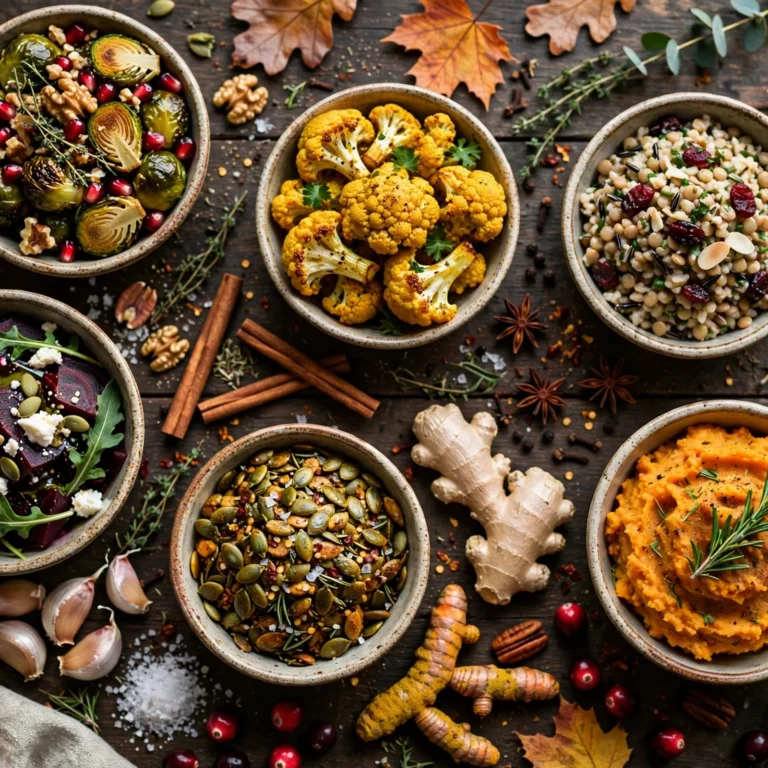
When the evenings turn cool and the market fills with squash, beets, carrots, and sturdy greens, 10 anti-inflammatory roasted vegetable recipes for fall meal prep can make your week feel a lot calmer. You roast a big tray or two on Sunday, pack the results into containers, and suddenly lunches and dinners are mostly assembled rather than cooked from scratch. These recipes lean on colorful vegetables, olive oil, herbs, spices, and plant proteins — foods that can fit into an anti-inflammatory eating pattern without turning dinner into a project. The overall dietary pattern matters more than any single recipe, so think of this collection as a practical way to eat more vegetables, more often, through the fall season.
Roasting concentrates flavor with simple tools: a hot oven, a sturdy sheet pan, and enough space between the pieces for the edges to caramelize.
What Makes Roasted Vegetable Recipes Anti-Inflammatory?
The idea is not about one magic ingredient. It is about the pattern on the plate. Colorful vegetables bring fiber and a wide range of plant compounds. Olive oil adds satisfying, unsaturated fat that helps you absorb some of the nutrients in those vegetables. Herbs and spices such as turmeric, ginger, rosemary, and garlic add depth without relying on heavy sauces or large amounts of added sugar and salt. When you add beans, lentils, tofu, nuts, or seeds, the dish becomes filling enough to stand on its own for lunch or to anchor a simple dinner.
That combination also helps with real-life eating. Roasted vegetables reheat well, travel well, and pair with grains, greens, and proteins you may already have. When vegetables sit at the center of most meals, with flavor from herbs and spices, the pattern is easy to repeat.
For more background on how these foods fit into an overall eating pattern, see Harvard Nutrition Source’s guide to vegetables and fruits and Harvard Nutrition Source’s guide to whole grains.
Quick Recipe Comparison Table: 10 Anti-Inflammatory Roasted Vegetable Recipes for Fall Meal Prep
| Recipe | Main Flavor | Protein Source (if any) | Best For |
|---|---|---|---|
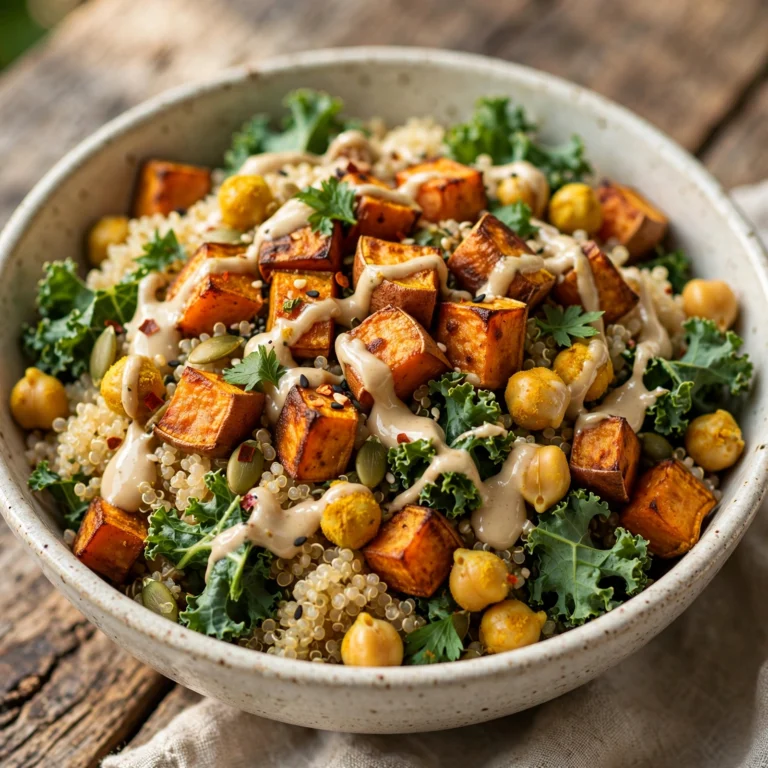
| Turmeric-Ginger Roasted Sweet Potatoes with Chickpeas | Warm, earthy, lightly citrusy | Chickpeas | Hearty grain bowls |
| Lemon-Herb Roasted Broccoli and Cauliflower with White Beans | Bright, herby, garlicky | White beans | Quick weeknight dinners |
| Balsamic Roasted Beets and Carrots with Walnuts | Sweet-tart, earthy, nutty | Walnuts | Salads and holiday sides |
| Smoky Paprika Roasted Butternut Squash with Lentils | Smoky, sweet, warming | Lentils | Filling meatless mains |
| Miso-Glazed Roasted Eggplant and Zucchini with Tofu | Savory, umami, gently sweet | Tofu | Rice bowls and noodles |
| Cumin-Spiced Roasted Cauliflower and Carrots with Tahini | Warm-spiced, nutty, tangy | Tahini and pumpkin seeds | Wraps and mezze plates |
| Rosemary Roasted Root Vegetables with Lentils | Woodsy, savory, caramelized | Lentils | Cozy Sunday meal prep |
| Harissa Roasted Pumpkin and Red Onion with Feta | Spicy, sweet, tangy | Feta | Bold-flavored grain bowls |
| Herb-Roasted Delicata Squash with Quinoa and Pumpkin Seeds | Herby, nutty, lightly sweet | Quinoa and pumpkin seeds | Light lunches and sides |
| Za’atar Roasted Cabbage Steaks with Chickpeas and Lemon | Herbal, lemony, savory | Chickpeas | Budget-friendly sheet-pan dinners |
Why Roasted Vegetable Recipes Are Perfect for Fall Meal Prep
Quick Answer: Roasted vegetables are perfect for fall meal prep because fall produce is sturdy, affordable, and built for the oven — you can roast large batches at once, and the leftovers stay tasty for days in salads, bowls, wraps, and soups.
Fall vegetables are dense and forgiving, and they hold their shape after cooking instead of turning mushy by Tuesday — exactly what you want when cooking once and eating several times.
While one tray roasts, you can cook quinoa or lentils, wash greens, and mix a dressing. In about an hour you have the base for several different meals: change the grain or sauce, and Monday’s sweet potatoes feel different from Wednesday’s.
What Makes an Anti-Inflammatory Roasted Vegetable Dish?
Quick Answer: A good anti-inflammatory roasted vegetable dish centers colorful vegetables, uses olive oil and herbs or spices for flavor, includes fiber and plant protein to keep you full, and avoids relying on heavy processed sauces, excess salt, or added sugar.
Start with color: orange squash, purple beets, green broccoli, and red onion make a varied tray. Olive oil adds satisfying fat, and garlic, ginger, turmeric, cumin, paprika, rosemary, and thyme add flavor.
Then think about balance. Most recipes below pair vegetables with beans, lentils, tofu, quinoa, nuts, or seeds, turning a side into a lunch you can rely on. Keep sauces simple: lemon and tahini, yogurt and herbs, or a light vinaigrette.
1. Turmeric-Ginger Roasted Sweet Potatoes with Chickpeas

Best For
Hearty grain bowls, packed lunches, and anyone who wants one tray to cover several meals.
Difficulty Level
Easy — mostly peeling, cubing, and tossing.
Prep Time Category
Quick prep, longer roast (about 15 minutes hands-on, 35–40 minutes in the oven).
Why You’ll Love It
This is the kind of recipe that makes meal prep feel effortless. Sweet potatoes caramelize, chickpeas crisp, and turmeric-ginger gives a warm golden color. Spoon it over rice or quinoa with greens and tahini for a complete lunch that reheats well.
Key Ingredients
- Sweet potatoes, peeled and cut into even cubes
- Canned chickpeas, drained, rinsed, and patted dry
- Extra-virgin olive oil
- Ground turmeric and freshly grated ginger
- Ground cumin and garlic powder
- Lemon juice and zest
- Fresh cilantro or parsley, for serving
- Tahini or plain yogurt, for drizzling
Flavor Profile
Warm and earthy from the turmeric and cumin, gently peppery from the ginger, and brightened at the end with lemon. The sweet potatoes bring natural sweetness, while the chickpeas add a nutty, toasty contrast. A drizzle of tahini makes it creamy without heaviness, and fresh herbs keep it from feeling too rich.
Helpful Tip
Pat the chickpeas very dry and give the tray plenty of space — crowded vegetables steam instead of crisping. Use two pans if needed, and toss chickpeas separately so they coat evenly.
2. Lemon-Herb Roasted Broccoli and Cauliflower with White Beans
Best For
Quick weeknight dinners and lighter lunches that still feel satisfying.
Difficulty Level
Easy — simple chopping and one pan.
Prep Time Category
Fast (about 10 minutes hands-on, 25–30 minutes in the oven).
Why You’ll Love It
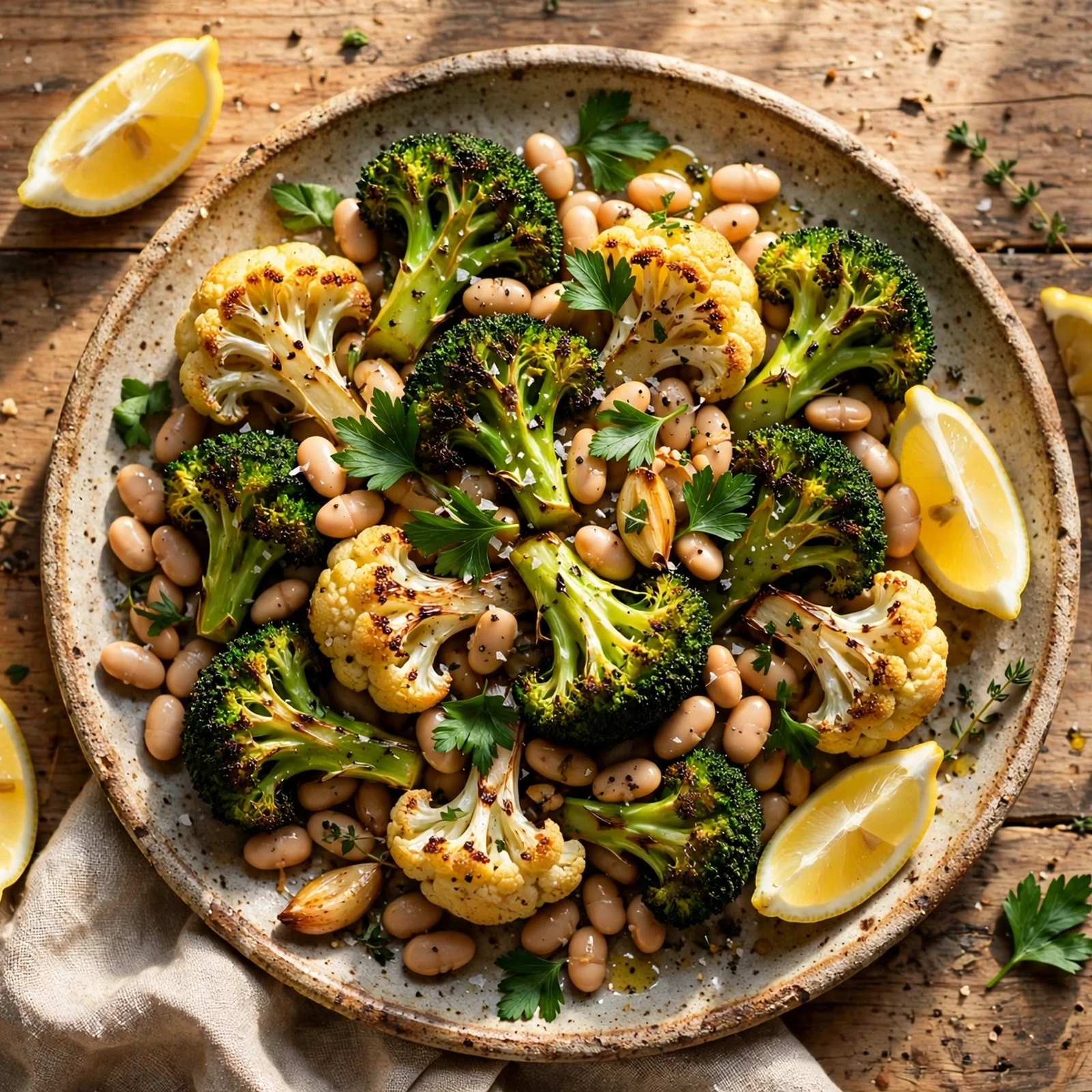
Roasted until edges brown, broccoli and cauliflower stay tender inside. White beans turn this side into a main, and lemon and herbs keep it bright hot or cold the next day.
Key Ingredients
- Broccoli florets and cauliflower florets
- Canned white beans, drained and rinsed
- Extra-virgin olive oil
- Garlic, thinly sliced or minced
- Lemon juice and zest
- Fresh parsley and thyme
- Red pepper flakes, to taste
- Sea salt and cracked black pepper
Flavor Profile
Bright, garlicky, and herby, with charred, nutty edges from the roasted florets. The lemon cuts through the richness of the oil, and the white beans soften the whole dish. A pinch of red pepper flakes adds warmth without making it spicy, and the fresh herbs give it a clean, garden-like finish.
Helpful Tip
Cut the florets to a similar size so they cook evenly, and add the garlic halfway through roasting so it does not burn. Finish with lemon juice after the tray comes out of the oven — lemon added before roasting dulls, while lemon added after stays bright.
3. Balsamic Roasted Beets and Carrots with Walnuts
Best For
Colorful salads, holiday side dishes, and grain bowls that need a sweet-tart lift.
Difficulty Level
Easy to moderate — beets take a little extra peeling and care.
Prep Time Category
Moderate (about 20 minutes hands-on, 40–45 minutes in the oven).
Why You’ll Love It
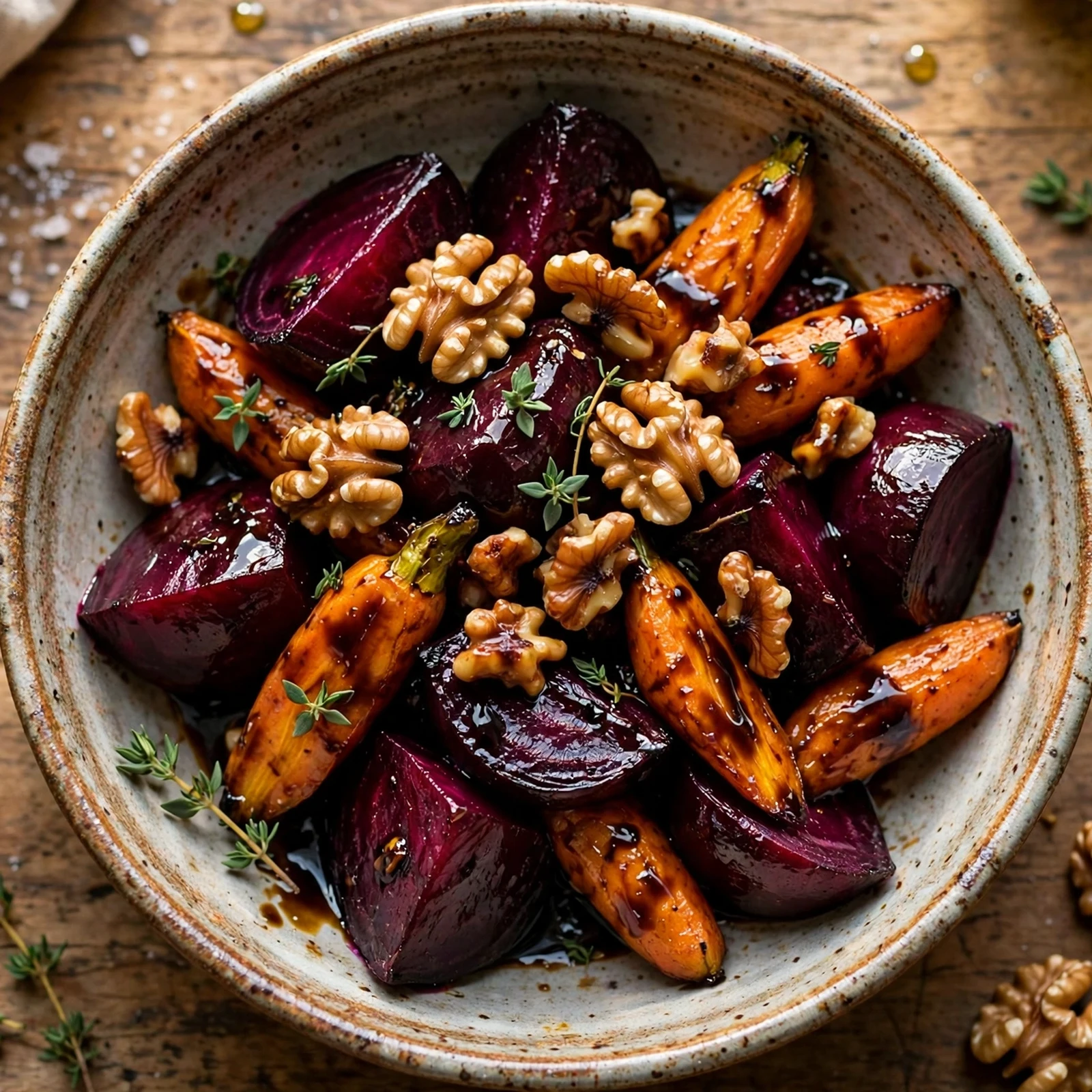
Beets and carrots are earthy and sweet, and roasting deepens both. Balsamic adds gentle tang, and toasted walnuts add crunch. Serve it warm as a side, or chilled over arugula.
Key Ingredients
- Beets, peeled and cut into wedges
- Carrots, peeled and cut into thick coins or batons
- Extra-virgin olive oil
- Balsamic vinegar
- Raw walnuts, roughly chopped
- Fresh thyme leaves
- Orange zest, optional but lovely
- Flaky salt and black pepper
Flavor Profile
Sweet, earthy, and slightly tart, with a toasted, nutty finish from the walnuts. The balsamic caramelizes in the oven and coats the vegetables in a glossy, tangy layer. Orange zest, if you use it, lifts the earthiness of the beets and makes the whole dish taste fresher and lighter.
Helpful Tip
Roast the beets and carrots on separate halves of the pan, or on separate pans, so the beet color does not stain everything pink — unless you like that look. Wear gloves when peeling beets, and toast the walnuts in the last five minutes of roasting so they do not burn.
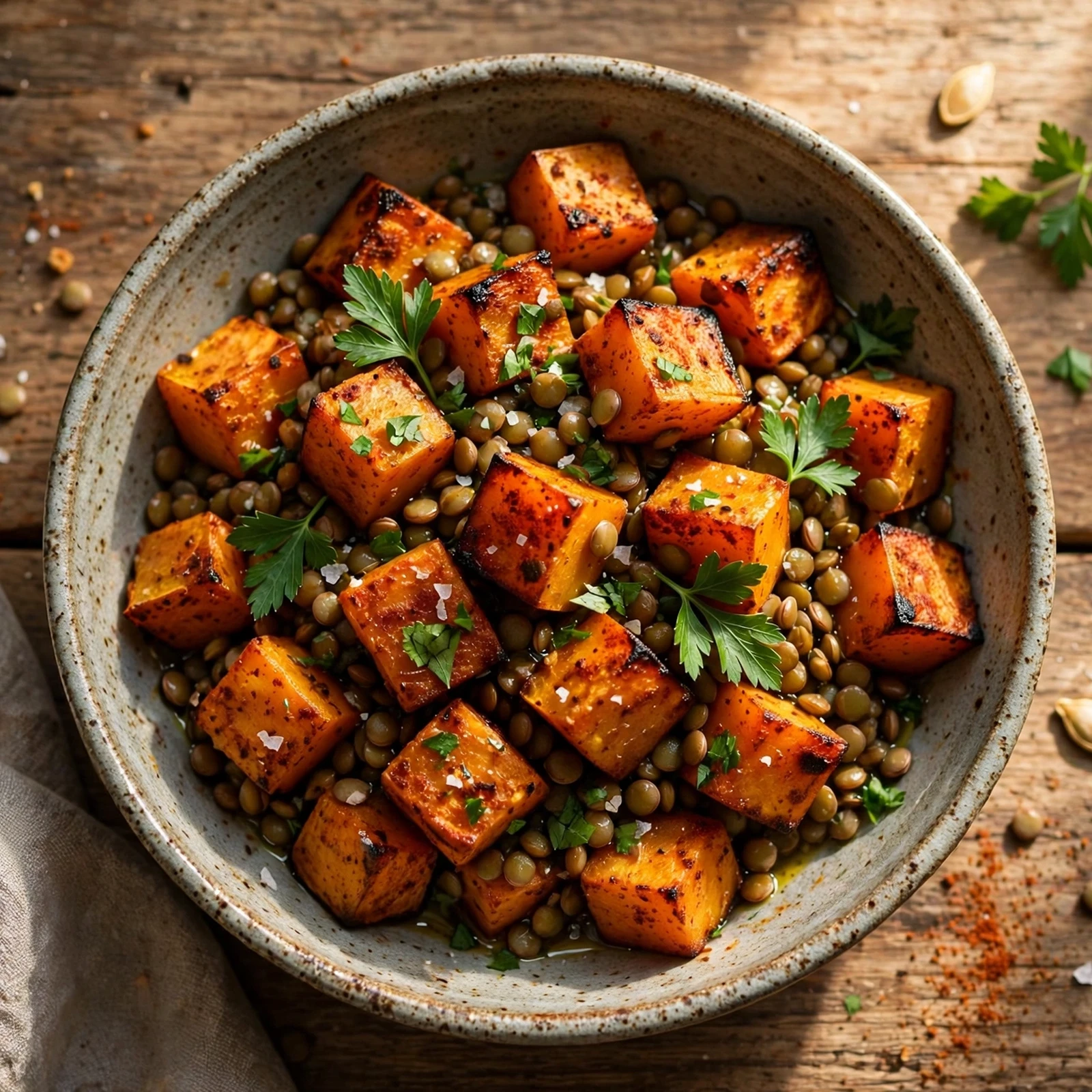
4. Smoky Paprika Roasted Butternut Squash with Lentils
Best For
Filling meatless mains, cozy dinners, and lunches that keep you full until dinner.
Difficulty Level
Easy — the squash is the only part that needs careful cutting.
Prep Time Category
Moderate (about 20 minutes hands-on, 35–40 minutes in the oven).
Why You’ll Love It
Butternut squash is sweet and satisfying when roasted. Smoked paprika adds grill-like warmth, and lentils make it a proper meal. Silky squash, tender lentils, and crunchy seeds make dinner feel hearty without heaviness.
Key Ingredients
- Butternut squash, peeled, seeded, and cubed
- Cooked brown or green lentils
- Extra-virgin olive oil
- Smoked paprika and ground cumin
- Red onion, cut into wedges
- Garlic cloves, smashed
- Pumpkin seeds, toasted
- Fresh parsley and lemon wedges, for serving
Flavor Profile
Smoky, sweet, and warming, with a savory depth from the onion and garlic. The squash caramelizes at the edges, the lentils stay earthy and mild, and the toasted pumpkin seeds add a nutty crunch. A squeeze of lemon at the end keeps the smokiness from feeling too heavy.
Helpful Tip
Cook the lentils separately until just tender, then fold them in after roasting — roasting them with the squash can dry them out. Keep seeds separate when storing so they stay crisp.
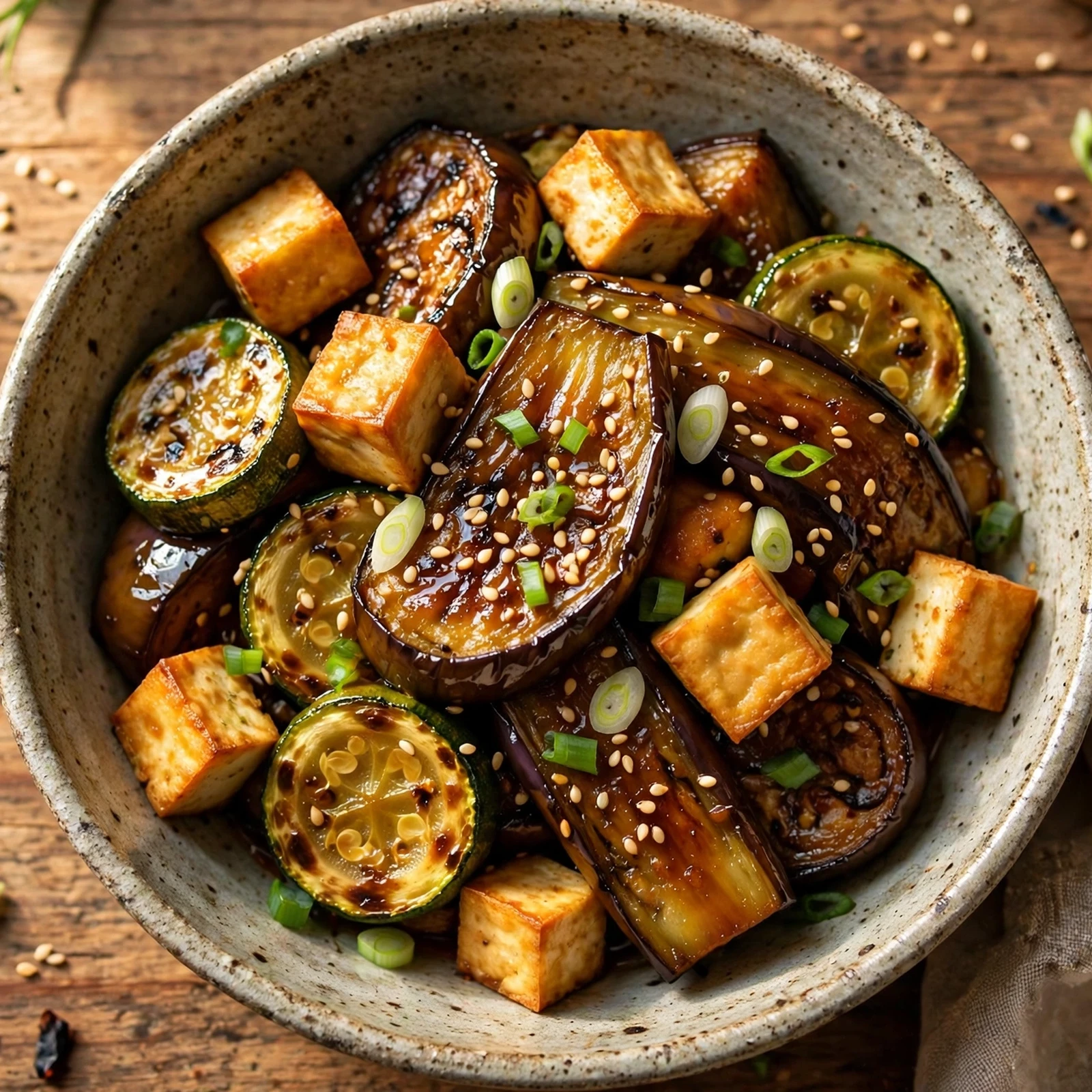
5. Miso-Glazed Roasted Eggplant and Zucchini with Tofu
Best For
Rice bowls, noodle bowls, and dinners when you want something savory and different.
Difficulty Level
Moderate — pressing tofu and glazing take a little attention.
Prep Time Category
Moderate (about 20 minutes hands-on plus tofu pressing, 30 minutes in the oven).
Why You’ll Love It
Properly roasted eggplant is silky and creamy, miso gives deep savory flavor, and crisp tofu makes it substantial. Served over rice with scallions and sesame, it makes a fresh, takeout-style bowl.
Key Ingredients
- Eggplant, cut into cubes
- Zucchini, cut into half-moons
- Extra-firm tofu, pressed and cubed
- White miso paste
- Extra-virgin olive oil or sesame oil
- Low-sodium soy sauce or tamari
- Fresh ginger, grated
- Scallions and sesame seeds, for serving
Flavor Profile
Savory and umami-rich, with a gentle sweetness from the miso glaze and a soft, melt-in-the-mouth texture from the eggplant. The ginger adds warmth, the tofu brings a toasty, chewy contrast, and scallions and sesame finish the bowl with freshness and crunch.
Helpful Tip
Salt the eggplant cubes and let them sit for 15 minutes, then pat dry — this helps them roast instead of turning soggy. Press the tofu well and toss it in a little oil before roasting so it crisps, and brush on the miso glaze in the last ten minutes so the sugars do not burn.
6. Cumin-Spiced Roasted Cauliflower and Carrots with Tahini

Best For
Wraps, mezze plates, and lunches built around dips and flatbread.
Difficulty Level
Easy — one pan, simple spices, no special technique.
Prep Time Category
Fast (about 10 minutes hands-on, 30–35 minutes in the oven).
Why You’ll Love It
Cumin gives cauliflower warm character that pairs with creamy tahini, and carrots add sweetness. It works hot, warm, or at room temperature — ideal for a lunchbox. Pile it into a wrap with greens, or serve it as part of a mezze spread.
Key Ingredients
- Cauliflower florets
- Carrots, cut into batons
- Extra-virgin olive oil
- Ground cumin and ground coriander
- Tahini
- Lemon juice
- Pumpkin seeds
- Fresh cilantro or mint, for serving
Flavor Profile
Warm-spiced and nutty, with a tangy, creamy tahini drizzle that ties everything together. The cauliflower turns nutty and golden at the edges, the carrots stay sweet, and the cumin and coriander give the dish a gentle, aromatic warmth. Fresh herbs on top keep it bright and balanced.
Helpful Tip
Thin the tahini with lemon juice and a little warm water until it pours easily — thick tahini clumps instead of drizzling. Season the tahini itself with a pinch of salt and garlic so the sauce tastes finished, not just plain.
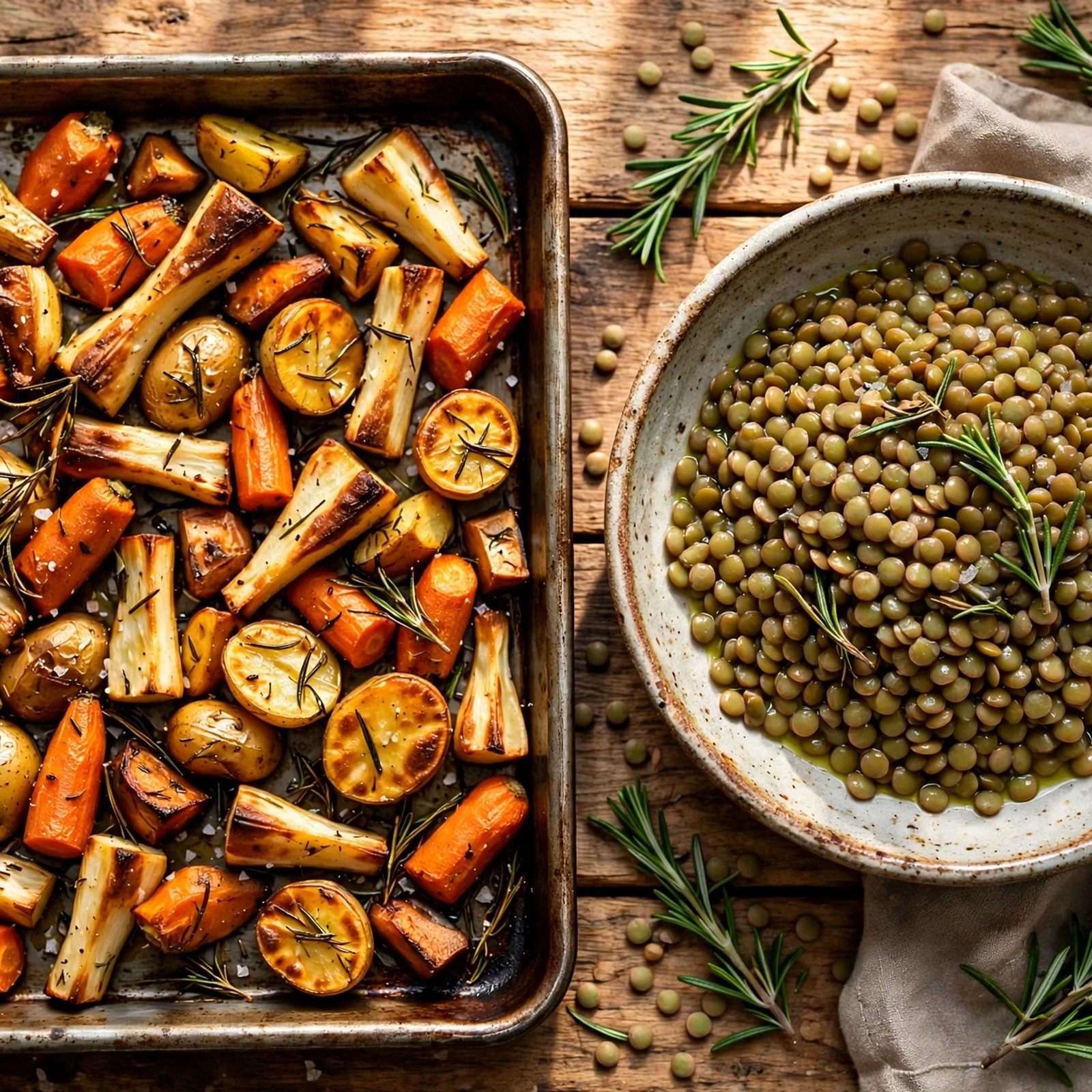
7. Rosemary Roasted Root Vegetables with Lentils
Best For
Cozy Sunday meal prep, family dinners, and hearty soup bases later in the week.
Difficulty Level
Easy — peeling and cubing are the main work.
Prep Time Category
Moderate (about 20 minutes hands-on, 45 minutes in the oven).
Why You’ll Love It
A tray of root vegetables with rosemary is sweet, savory, and rustic. Parsnips, turnips, carrots, and potatoes each bring a different texture, and lentils make it filling.
Key Ingredients
- Parsnips, carrots, and turnips, peeled and cubed
- Baby potatoes, halved
- Cooked green or brown lentils
- Extra-virgin olive oil
- Fresh rosemary sprigs
- Garlic cloves, smashed
- Dijon mustard, for the dressing
- Apple cider vinegar and fresh parsley
Flavor Profile
Woodsy and savory, with caramelized sweetness from the parsnips and carrots and an earthy base from the turnips and lentils. Rosemary perfumes the whole tray, garlic softens into sweetness, and a light mustard-vinegar dressing at the end adds just enough sharpness to keep it lively.
Helpful Tip
Cut denser roots like turnips a little smaller than softer ones like potatoes so everything finishes at the same time. Keep rosemary sprigs whole during roasting, then strip leaves over the finished dish.
8. Harissa Roasted Pumpkin and Red Onion with Feta

Best For
Bold-flavored grain bowls, dinner-party sides, and anyone who likes a little heat.
Difficulty Level
Easy — mostly cubing pumpkin and whisking a paste.
Prep Time Category
Moderate (about 15 minutes hands-on, 35–40 minutes in the oven).
Why You’ll Love It
Sweet pumpkin partners perfectly with spicy harissa, red onion softens alongside it, and feta adds salty creaminess. This is not a quiet side dish — it is the one people ask about. Serve it over couscous or quinoa.
Key Ingredients
- Pumpkin or kabocha squash, peeled and cubed
- Red onions, cut into wedges
- Harissa paste
- Extra-virgin olive oil
- Feta, crumbled
- Honey or maple syrup, just a touch
- Fresh mint leaves
- Toasted pine nuts or pumpkin seeds
Flavor Profile
Spicy, sweet, and tangy all at once. Harissa brings chili warmth and complex spice, pumpkin brings mellow sweetness, and feta adds salt and creaminess. Mint cools the heat, and toasted seeds give the soft vegetables a welcome crunch.
Helpful Tip
Harissa brands vary a lot in heat, so start with less than you think you need and taste the paste first. Add feta only after roasting.
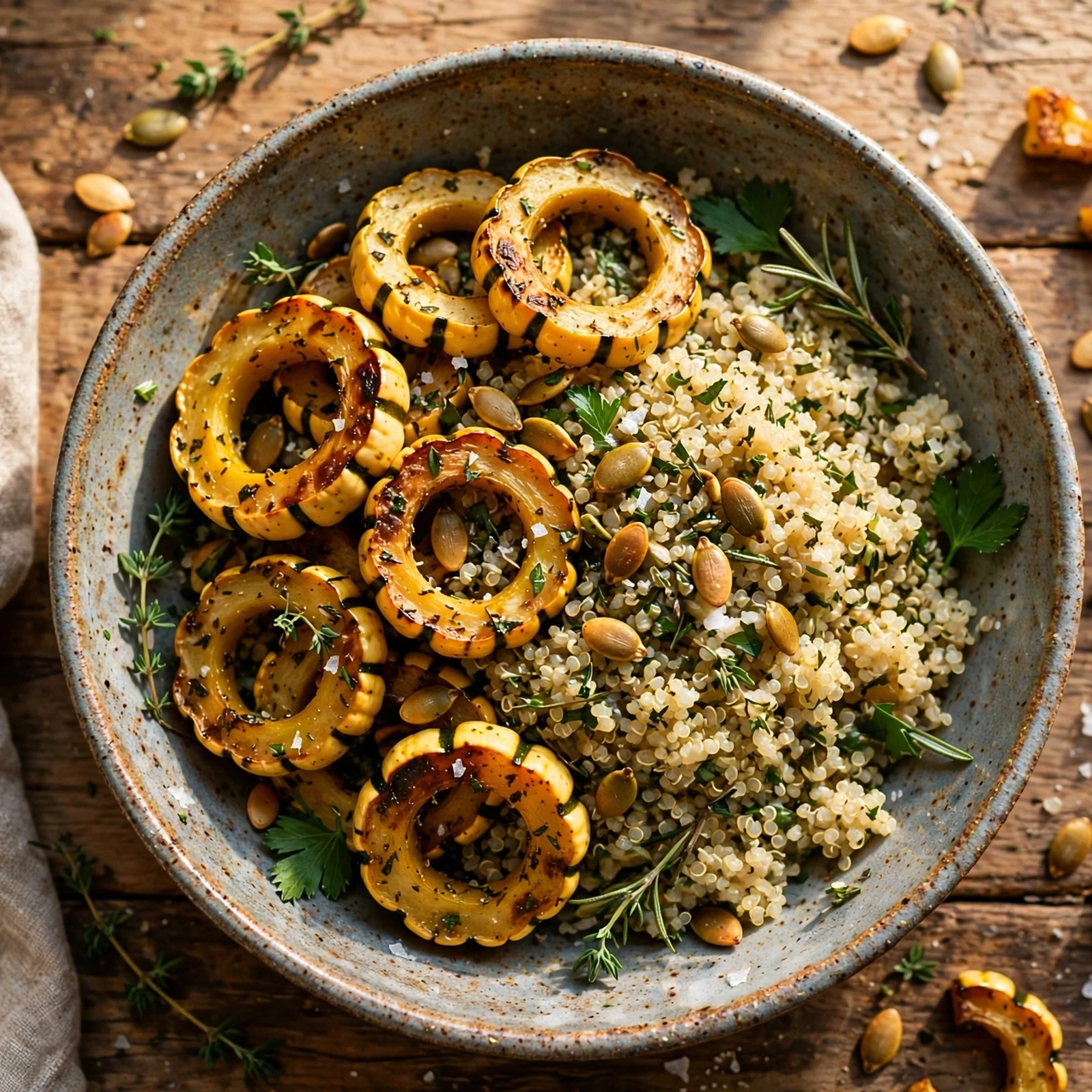
9. Herb-Roasted Delicata Squash with Quinoa and Pumpkin Seeds
Best For
Light lunches, elegant sides, and meal prep that looks as good as it tastes.
Difficulty Level
Easy — delicata squash needs no peeling, which saves real time.
Prep Time Category
Fast (about 10 minutes hands-on, 25–30 minutes in the oven).
Why You’ll Love It
Delicata has edible thin skin, sweet flesh, and slices that roast quickly. Tossed with quinoa and pumpkin seeds, it becomes a complete, light meal that packs well.
Key Ingredients
- Delicata squash, halved, seeded, and sliced into half-moons
- Cooked quinoa
- Pumpkin seeds, toasted
- Extra-virgin olive oil
- Fresh sage and thyme leaves
- Lemon juice and zest
- Dried cranberries, unsweetened if possible
- Sea salt and black pepper
Flavor Profile
Herby, nutty, and lightly sweet, with a delicate, almost buttery squash texture. Sage and thyme add an autumnal, savory note, cranberries bring small pops of tartness, and pumpkin seeds give crunch. Lemon keeps the dish from feeling too rich or one-note.
Helpful Tip
Do not peel delicata — the skin softens beautifully in the oven and holds the slices together. Slice evenly and flip once halfway through.
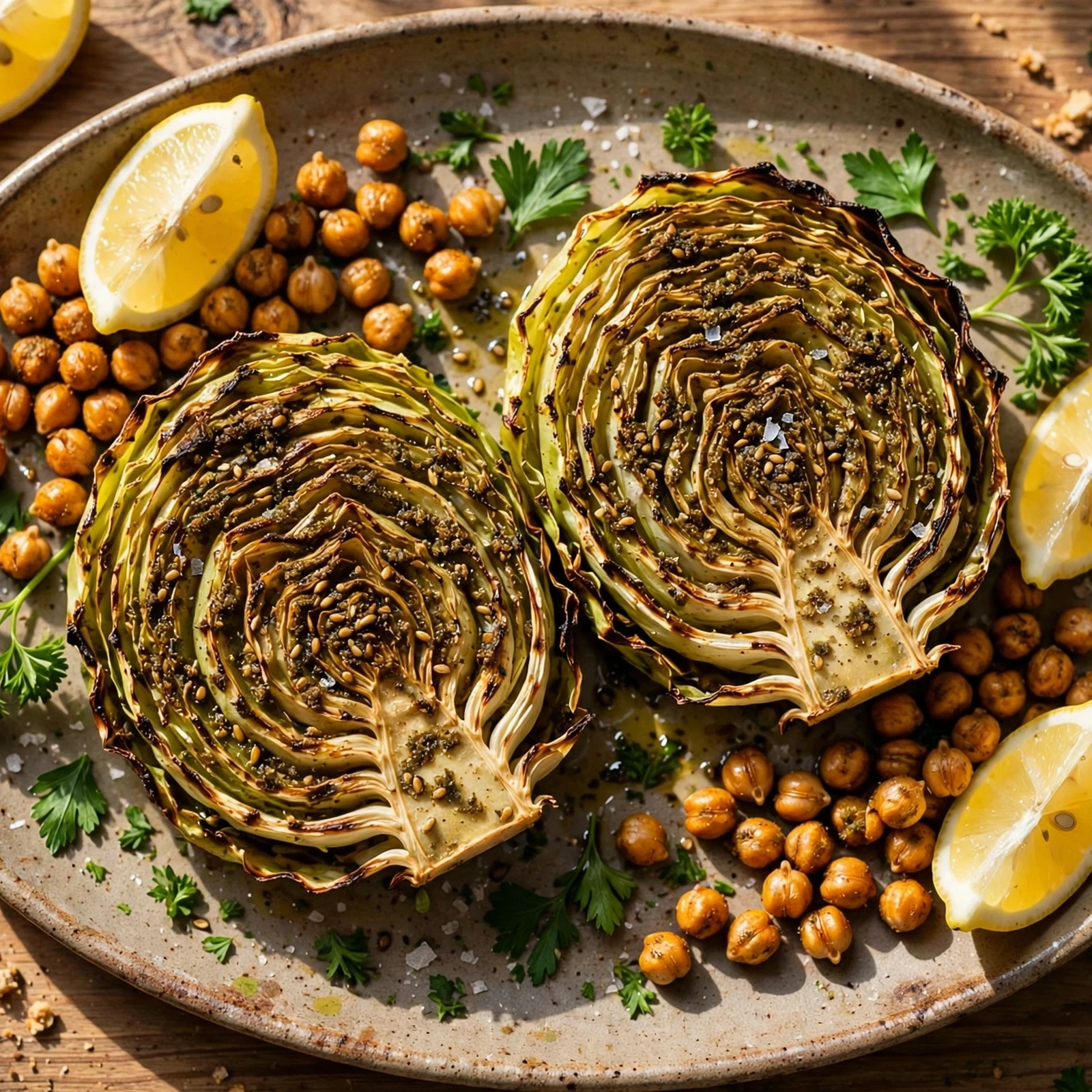
10. Za’atar Roasted Cabbage Steaks with Chickpeas and Lemon
Best For
Budget-friendly sheet-pan dinners and a surprising use for an everyday vegetable.
Difficulty Level
Easy — slicing cabbage thickly is the main skill.
Prep Time Category
Fast (about 10 minutes hands-on, 30–35 minutes in the oven).
Why You’ll Love It
Thick cabbage steaks crisp at the edges while staying tender inside. Za’atar gives savory, tangy character, chickpeas add crunch, and lemon adds brightness. It is cheap and filling.
Key Ingredients
- Green or savoy cabbage, cut into thick steaks
- Canned chickpeas, drained, rinsed, and patted dry
- Za’atar seasoning
- Extra-virgin olive oil
- Lemon juice and wedges
- Garlic powder
- Fresh parsley
- Tahini, for drizzling
Flavor Profile
Herbal, lemony, and savory, with caramelized, almost nutty cabbage edges and a toasty sesame note from the za’atar. The chickpeas add crunch, the lemon lifts the richness of the oil, and a tahini drizzle makes the whole plate feel creamy and complete.
Helpful Tip
Keep the cabbage core intact when you slice — it holds each steak together on the pan. Roast at high heat and let the underside brown before turning.
Which Roasted Vegetable Recipe Should You Try First?
If you are new to meal prep, start with recipe 1, the turmeric-ginger sweet potatoes with chickpeas. It is forgiving, the ingredients are easy to find, and it works in bowls, wraps, and salads all week. If you want something faster, recipe 2 — lemon-herb broccoli and cauliflower with white beans — is ready in about half an hour and needs only one pan. And if you are cooking for guests or want a dish that looks special, recipe 3, the balsamic beets and carrots with walnuts, brings color and a festive feel with very little extra effort.
Choose by what you already have. Pick one recipe, cook it well, and add another to your rotation the following week.
Best Ingredients to Pair with Roasted Vegetables
Roasted vegetables are team players. Grains such as quinoa, brown rice, farro, and couscous turn them into a filling bowl. Greens like arugula, spinach, or massaged kale add freshness and contrast, especially when the vegetables are served warm over them. Beans and lentils add protein and fiber, while tofu, feta, or yogurt add creaminess or tang.
For flavor, keep olive oil, lemons, tahini, mustard, vinegar, spices, and fresh herbs on hand. Toasted nuts or seeds add crunch, and a fresh dressing can make the same base taste new again.
Meal Prep and Storage Tips
Cool roasted vegetables completely before packing them — warm vegetables trapped in a sealed container turn steamy and soft. Store them in airtight containers in the fridge and use them within four days for the best texture. Keep dressings, sauces, and crunchy toppings separate until serving, so nothing goes soggy.
For texture, reheat in a hot oven or skillet rather than the microwave. Many of these recipes also taste good at room temperature over greens or grains. Eat softer vegetables, like eggplant and zucchini, earlier in the week.
Common Mistakes
The most common mistake is crowding the pan. Vegetables packed tightly together steam instead of roasting, so they stay pale and soft. Use two pans if needed, and leave space between pieces. The second mistake is uneven cutting — small pieces burn while large pieces stay raw, so aim for similar sizes within each vegetable. The third is under-seasoning: vegetables need enough salt, oil, and acid to taste vibrant, especially after chilling. Taste after roasting and adjust with lemon, herbs, or a pinch of salt before serving.
Finally, do not store hot food in sealed containers — it shortens shelf life and hurts texture.
People Also Ask
Readers often ask the same practical questions about roasted vegetable meal prep: how long roasted vegetables last in the fridge, whether they freeze well, which vegetables hold up best after a few days, how to keep them from going soggy, and which recipe is the best place to start. The answers below cover those points directly, with storage times and swap ideas you can use right away.
Frequently Asked Questions
Q: How long do roasted vegetables last in the fridge?
Most roasted vegetables keep well for 3 to 4 days in an airtight container in the fridge. Let them cool completely before sealing, keep sauces separate, and reheat in a hot oven or skillet for the best texture.
Q: Can you freeze roasted vegetables for meal prep?
Yes, sturdier vegetables like sweet potatoes, squash, carrots, and cauliflower freeze well for up to 2 to 3 months. Cool them fully, spread them on a tray to freeze first so they do not clump, then transfer to freezer bags. Softer vegetables like zucchini and eggplant are better eaten fresh, as they can turn watery after thawing.
Q: What swaps work if I do not have a listed ingredient?
Most swaps are easy: sweet potatoes can replace butternut squash, chickpeas can replace white beans, and tahini can stand in for a yogurt drizzle. Keep the cooking method the same, cut pieces to a similar size, and adjust seasoning to taste — the flavor will shift slightly, but the dish will still work.
Q: How do I build a full meal prep week from these recipes?
Pick two recipes for the week rather than cooking all ten. Roast both on Sunday, cook one grain and one protein base, and mix and match through the week with different greens, dressings, and toppings. That gives you variety without spending your whole weekend cooking.
Q: Which recipe is best to try first?
Start with the turmeric-ginger roasted sweet potatoes with chickpeas. It is simple, forgiving, and versatile — it works in bowls, wraps, and salads, reheats well, and uses ingredients you can find in most grocery stores.
More Healthy Fall Recipe Inspiration
Cozy soups, harvest grain bowls, and warm salads build on the same idea: seasonal produce, simple seasoning, and a little weekend planning. Turn leftovers into a wrap or grain bowl the next day.
Here are a few related Fuel Nourish collections to explore next:
- 25 Cozy Fall Anti-Inflammatory Recipes to Warm Your Soul
- 20 Fall Anti-Inflammatory Harvest Bowls with Root Vegetables
- 15 One-Pot Anti-Inflammatory Fall Dinners for Easy Weeknights
Conclusion
Fall meal prep does not need to be complicated to be satisfying. A hot oven, a few sturdy vegetables, olive oil, herbs, and spices can carry you through the week with lunches and dinners that actually taste good on day three. Start with one recipe, learn how your oven and your schedule work together, and build from there. Over time, roasted vegetables become less of a recipe and more of a habit — one that keeps your fridge colorful, your meals varied, and your weeknights a little calmer.