January Anti-Inflammatory Meal Plan for Energy Boost
January has a way of asking for a reset without asking for a complete overhaul. After weeks of rich holiday food, late nights, and irregular meals, your body often wants something simpler: regular meals, plenty of vegetables, whole grains, and protein that actually keeps you full. This seven-day plan gives you that structure, one day at a time, with breakfast, lunch, and dinner planned so you do not have to decide everything from scratch each morning.
The plan below can fit into an anti-inflammatory eating pattern, and it is built around foods you can find in a regular grocery store in winter: oats, beans, lentils, root vegetables, citrus, leafy greens, salmon, chicken, eggs, nuts, seeds, and olive oil. You can swap a protein, change a grain, or repeat a favorite day without breaking the plan. Remember that overall dietary pattern matters more than any single recipe, so a steady week of balanced meals counts for more than one perfect day.
What Makes January Anti-Inflammatory Meal Plan for Energy Boost Anti-Inflammatory?
This plan leans on the foods that show up again and again in an anti-inflammatory eating pattern: colorful vegetables and fruit, whole grains, beans and lentils, fatty fish, nuts and seeds, and olive oil. Each day pairs fiber with protein and a little healthy fat, which helps a meal feel satisfying and steady rather than heavy one hour and empty the next. Turmeric, ginger, garlic, and herbs add warmth and flavor without needing extra salt, sugar, or cream.
Winter cooking also helps the pattern work in real life. Soups, sheet-pan vegetables, and grain bowls are easy to batch, easy to reheat, and easy to pack for work. When the food is already ready, you are far more likely to eat the meal you planned instead of skipping lunch or grabbing something rushed. That practical side matters just as much as the ingredient list.
For background reading, see the National Center for Complementary and Integrative Health’s turmeric page and Harvard Nutrition Source’s review of the anti-inflammatory diet.
Quick Recipe Comparison Table: January Anti-Inflammatory Meal Plan for Energy Boost
| Recipe | Main Flavor | Protein Source (if any) | Best For |
|---|---|---|---|
| Day 1. Citrus and Greens Reset Day | Bright citrus and herb | Salmon and eggs | A fresh start after holiday eating |
| Day 2. Oats, Beans, and Roasted Roots Day | Warm, earthy, and spiced | Beans and lentils | Budget-friendly pantry cooking |
| Day 3. Chicken, Barley, and Greens Day | Savory herb and lemon | Chicken | A filling workday with leftovers |
| Day 4. Salmon, Sweet Potato, and Citrus Day | Roasted sweet and citrus | Salmon | A simple fish dinner night |
| Day 5. Lentil, Mushroom, and Walnut Day | Deep, savory, and nutty | Lentils and walnuts | Meatless comfort food |
| Day 6. Slow Weekend Soup and Grain Bowl Day | Cozy, herby, and brothy | Chickpeas and eggs | Slow weekend batch cooking |
| Day 7. Bright Citrus, Greens, and Grain Day | Fresh, lemony, and crisp | Chicken or tofu | Setting up the next week |
Why January Anti-Inflammatory Meal Plan for Energy Boost Is Perfect for January
Quick Answer: January is a natural time for routine, and this plan gives you that routine with winter produce, pantry staples, and meals that reheat well, so balanced eating feels doable on cold, busy days.
In January, daylight is short and schedules tighten again after the holidays. You need meals that cook in one pot or on one pan, keep well in the fridge, and do not demand a special shopping trip. Root vegetables, cabbage, citrus, frozen berries, oats, and beans are at their most useful right now, and this plan uses them on repeat in different ways so nothing feels boring.
The plan also avoids an all-or-nothing approach. If you miss a lunch or swap a dinner, you can pick up the next meal and keep going. That flexibility is what makes a January plan last past the second week, when the novelty wears off and real life takes over.
What Makes an Anti-Inflammatory Meal Plan?
Quick Answer: An anti-inflammatory meal plan is built around a pattern of vegetables, fruit, whole grains, beans, nuts, seeds, olive oil, and fish or other lean proteins, with herbs and spices for flavor and fewer heavily processed foods.
No single meal carries the whole pattern. What matters is the balance across the day and the week: fiber from plants and whole grains, protein at each meal, healthy fats from olive oil, nuts, and fish, and color from different vegetables and fruits. Water, sleep, and regular movement support the same steady feeling, even though they are not on the plate.
Use this plan as a template, not a rulebook. Keep the structure, breakfast with protein and fiber, a vegetable-heavy lunch, and a dinner built around vegetables plus a protein, and change the details to fit your taste, budget, and kitchen.
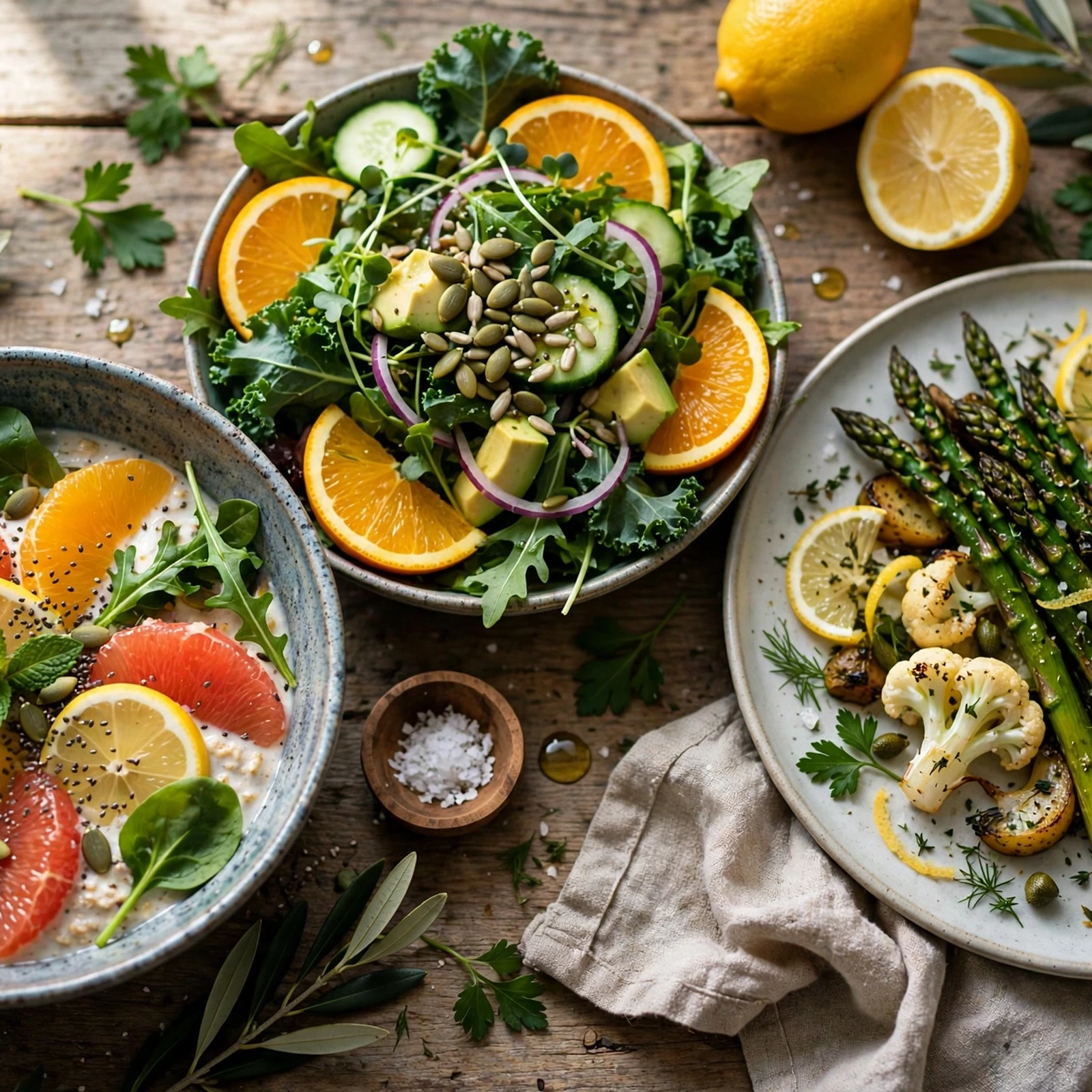
Day 1. Citrus and Greens Reset Day
Best For
A fresh start after holiday eating, when you want light, bright flavors and a simple day of cooking.
Difficulty Level
Easy. Everything is stovetop or oven-roasted, with no special equipment needed.
Prep Time Category
Moderate. About 30 to 45 minutes of active cooking across the day, with roasting time on top.
Why You’ll Love It
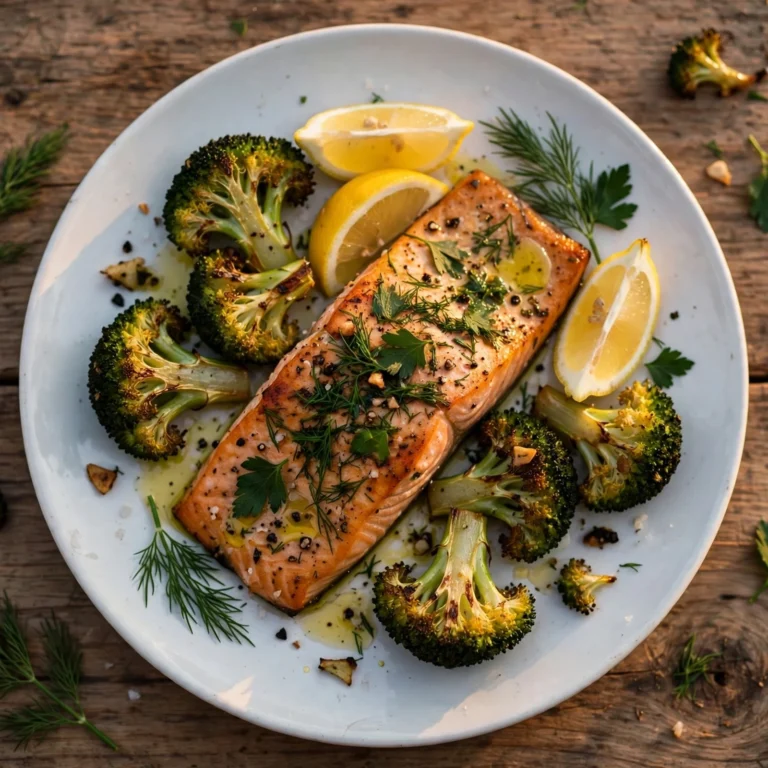
Breakfast is eggs with sautéed greens and whole-grain toast, lunch is a citrus and chickpea salad with olive oil dressing, and dinner is baked salmon with roasted broccoli and quinoa. The citrus keeps every meal bright, the greens add color and crunch, and the salmon dinner feels satisfying without feeling heavy. You finish the day with leftovers for tomorrow’s lunchbox.
Key Ingredients
- Eggs
- Leafy greens such as spinach or kale
- Oranges and lemons
- Chickpeas
- Salmon fillets
- Broccoli
- Quinoa
- Olive oil
Flavor Profile
Bright and savory, with lemon and orange cutting through rich salmon and olive oil, and garlic and herbs grounding the greens.
Helpful Tip
Zest the citrus before you juice it, and save the zest for the salmon and the salad dressing. It adds a lot of flavor for no extra cost.
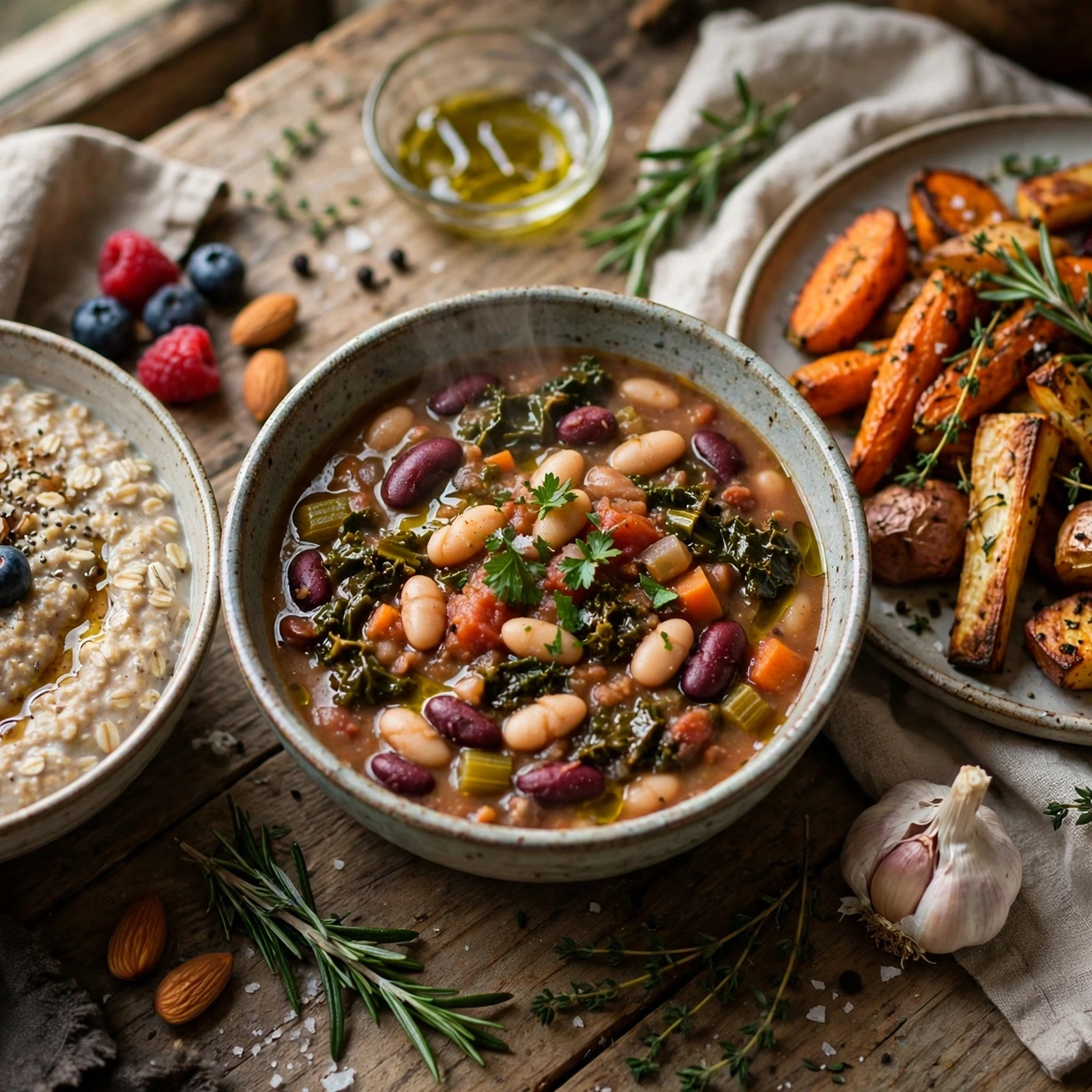
Day 2. Oats, Beans, and Roasted Roots Day
Best For
Budget-friendly pantry cooking, when you want filling meals from ingredients you already have at home.
Difficulty Level
Easy. Oats, canned beans, and roasted vegetables do most of the work.
Prep Time Category
Moderate. Roasting the roots takes time, but hands-on work stays under 40 minutes.
Why You’ll Love It
Breakfast is warm oats with frozen berries, walnuts, and ground flaxseed, lunch is a white bean and roasted carrot soup, and dinner is lentils with roasted sweet potato and a tahini-lemon drizzle. Every meal is high in fiber, so you stay full for hours, and the whole day costs far less than a takeout-heavy day.
Key Ingredients
- Rolled oats
- Frozen mixed berries
- Walnuts
- White beans
- Carrots and parsnips
- Brown or green lentils
- Sweet potatoes
- Tahini
Flavor Profile
Warm and earthy, with cumin and smoked paprika in the soup, sweet roasted roots, and a tangy tahini finish at dinner.
Helpful Tip
Roast a double batch of roots at dinner and save half for tomorrow’s grain bowl. Cold roasted sweet potato is excellent the next day.
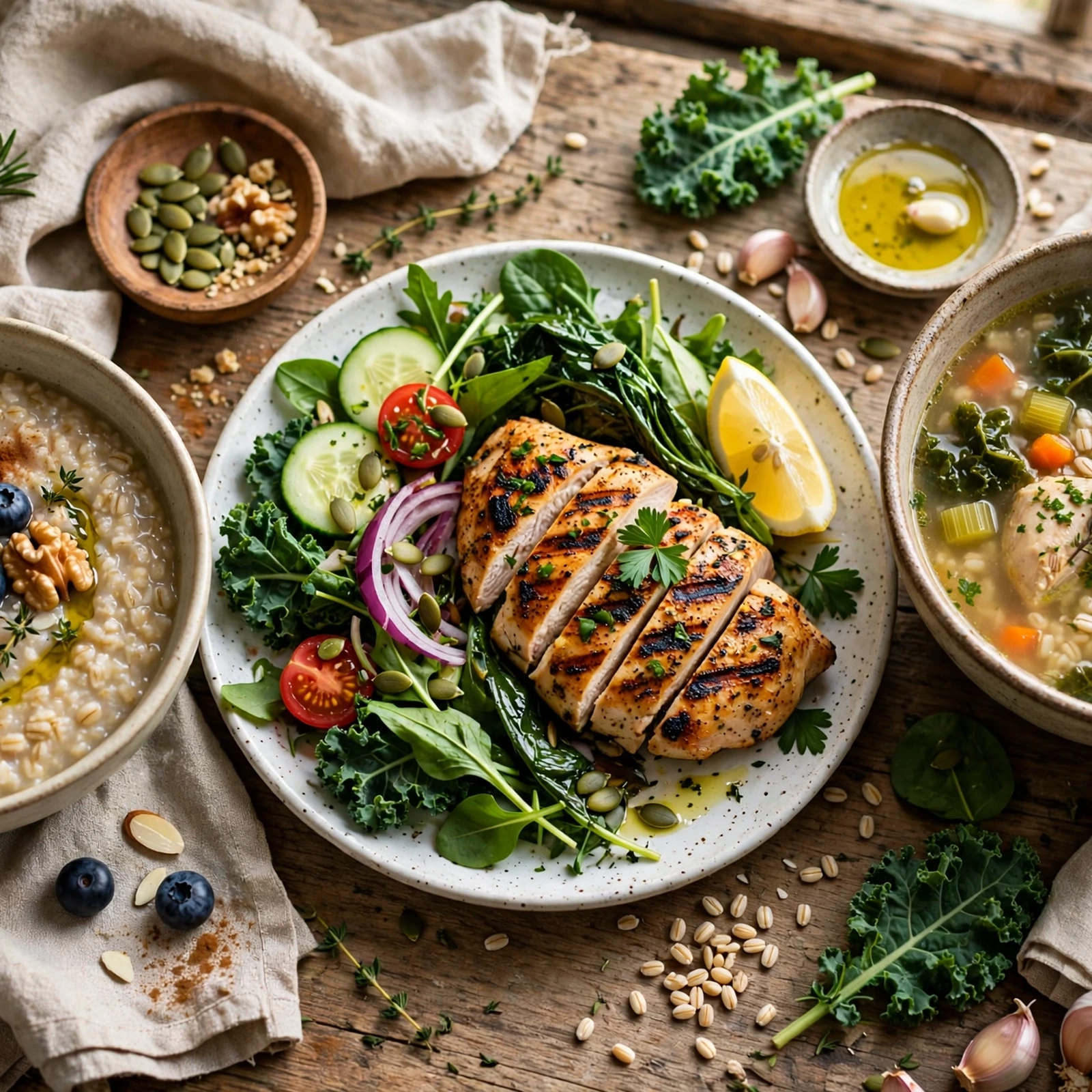
Day 3. Chicken, Barley, and Greens Day
Best For
A filling workday with leftovers, when you need lunch ready to grab and a dinner that feeds the family.
Difficulty Level
Easy to moderate. Barley needs a longer simmer, but it mostly cooks itself.
Prep Time Category
Moderate to longer. Start the barley early, or use quick-cooking barley on a busy night.
Why You’ll Love It
Breakfast is Greek yogurt with oats, berries, and pumpkin seeds, lunch is leftover-style chicken and barley soup with carrots and celery, and dinner is herb-roasted chicken thighs with barley, cabbage, and a lemon dressing. The barley is chewy and filling, the chicken stays juicy, and the lemon keeps the whole day from tasting heavy.
Key Ingredients
- Chicken thighs or breasts
- Pearl barley
- Greek yogurt
- Carrots and celery
- Cabbage
- Lemons
- Fresh herbs such as parsley
- Olive oil
Flavor Profile
Savory and herby, with lemon brightness, roasted chicken richness, and nutty barley underneath.
Helpful Tip
Cook extra barley and freeze it in one-cup portions. It thaws quickly and turns a future soup or salad into a ten-minute meal.
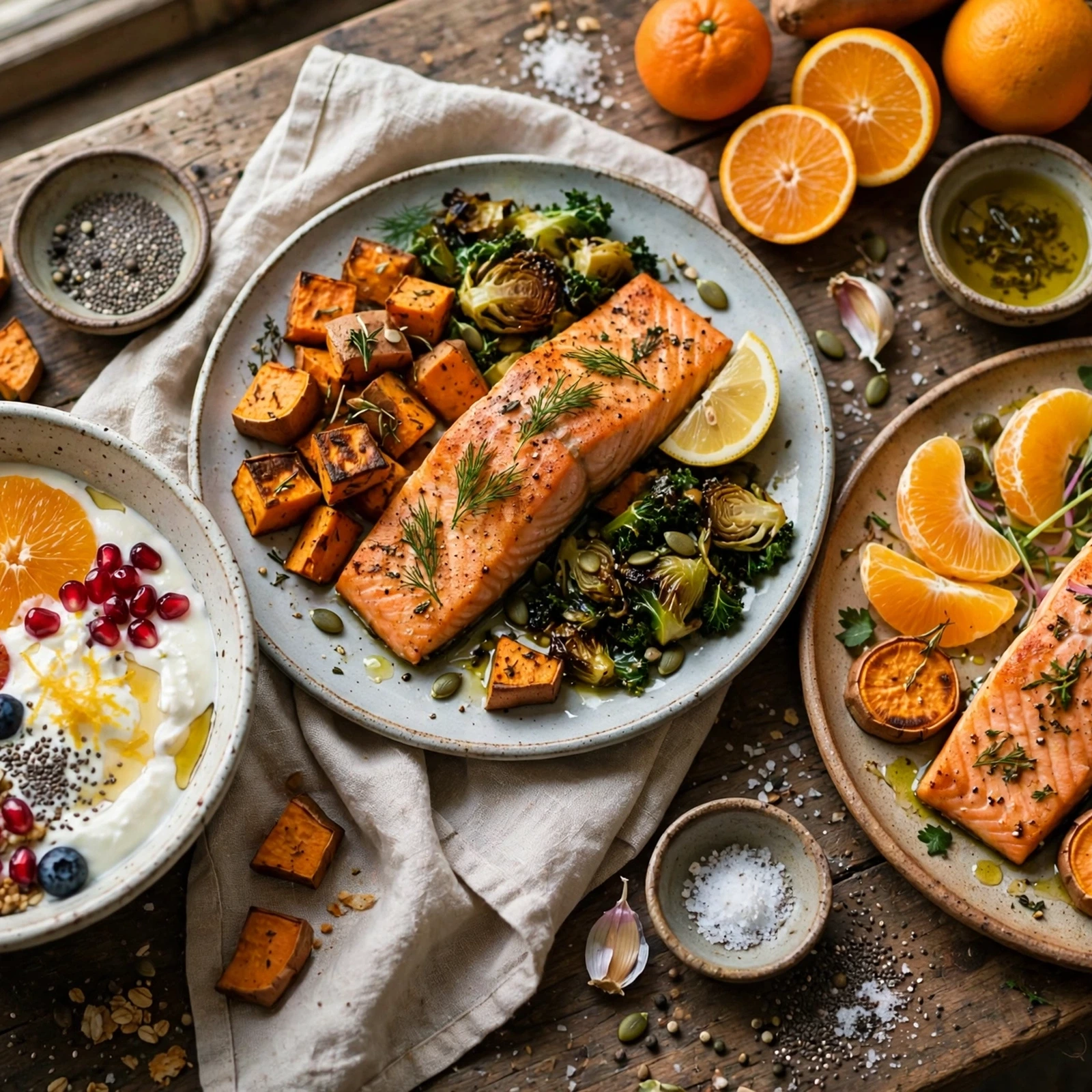
Day 4. Salmon, Sweet Potato, and Citrus Day
Best For
A simple fish dinner night, when you want one sheet pan and a meal that looks and tastes special.
Difficulty Level
Easy. One pan, one salad, and a quick breakfast that needs no cooking beyond eggs.
Prep Time Category
Quick to moderate. Breakfast and lunch take under 20 minutes each; dinner roasts in about 30 minutes.
Why You’ll Love It
Breakfast is a spinach and feta egg scramble with whole-grain toast, lunch is a tuna and white bean salad with red onion and herbs, and dinner is sheet-pan salmon with sweet potato wedges and orange segments. The sweet-savory pairing works beautifully in winter, and the whole day gives you a good mix of fish, beans, vegetables, and whole grains.
Key Ingredients
- Salmon fillets
- Sweet potatoes
- Oranges
- Spinach
- Eggs
- Canned tuna in water
- White beans
- Red onion
Flavor Profile
Roasted sweet and citrusy, with caramelized sweet potato, juicy orange, and savory salmon and herbs.
Helpful Tip
Do not crowd the sheet pan. Give the sweet potato room to crisp, and add the salmon for the last 12 to 15 minutes so it stays tender.
Day 5. Lentil, Mushroom, and Walnut Day
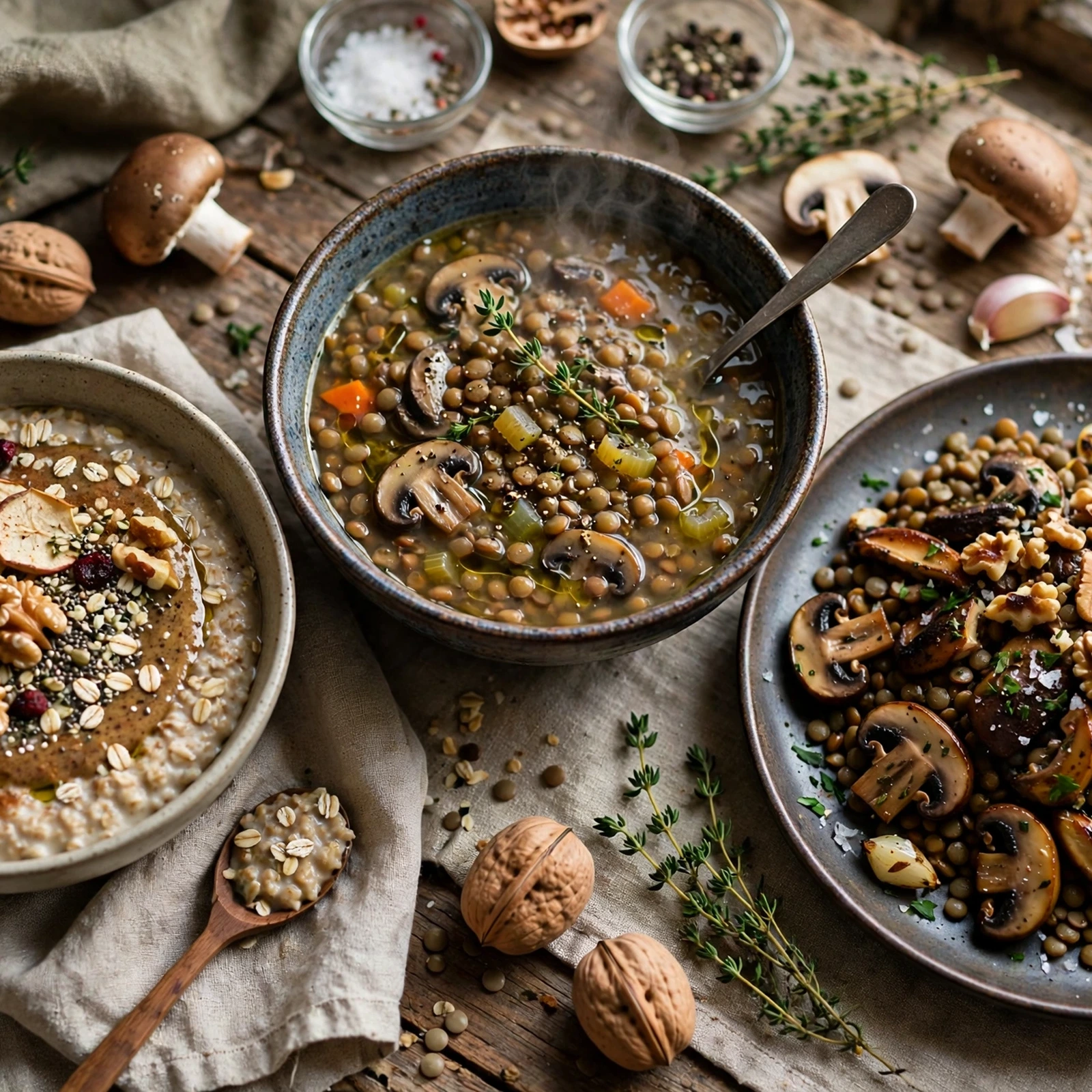
Best For
Meatless comfort food, when you want a deep, savory dinner without meat.
Difficulty Level
Easy to moderate. The lentil stew simmers hands-free while you prep the rest.
Prep Time Category
Moderate. About 45 minutes total, mostly simmering time.
Why You’ll Love It
Breakfast is overnight oats with pear, walnuts, and cinnamon, lunch is mushroom and lentil soup with whole-grain bread, and dinner is lentil and mushroom ragù over whole-grain pasta with a walnut and parsley topping. The mushrooms give the day a rich, savory depth, the walnuts add crunch, and the meals feel hearty on a cold night.
Key Ingredients
- Brown lentils
- Mushrooms
- Walnuts
- Rolled oats
- Pears
- Whole-grain pasta
- Tomatoes
- Garlic and thyme
Flavor Profile
Deep, savory, and nutty, with earthy mushrooms, sweet pear at breakfast, and tomato and thyme at dinner.
Helpful Tip
Toast the walnuts in a dry pan for two minutes before topping the pasta. Toasting changes the flavor completely and costs almost no time.
Day 6. Slow Weekend Soup and Grain Bowl Day
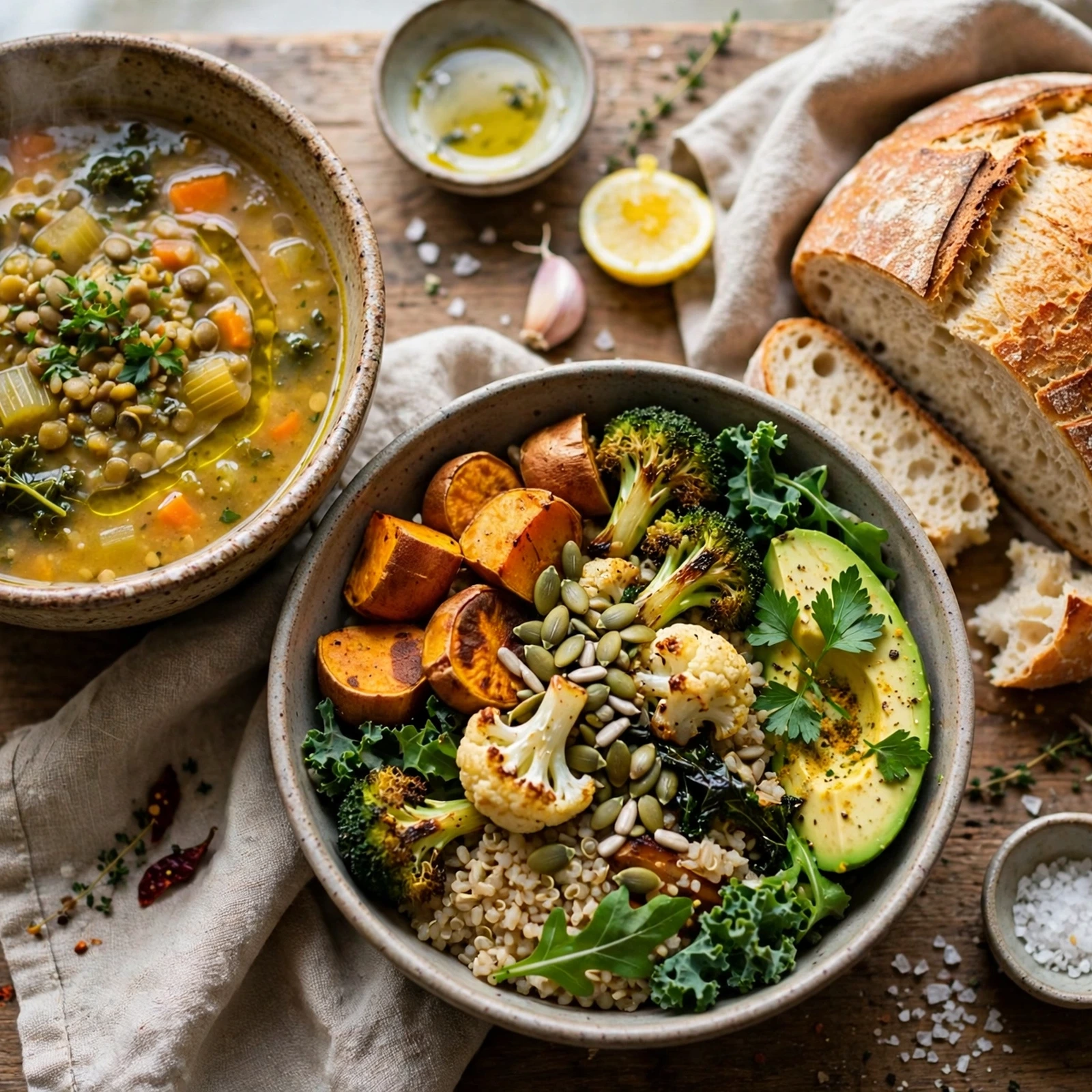
Best For
Slow weekend batch cooking, when you have an hour to cook and want meals for the days ahead.
Difficulty Level
Easy. Mostly chopping and simmering, with a big pot doing the work.
Prep Time Category
Longer, but relaxed. About an hour of weekend cooking that pays off all week.
Why You’ll Love It
Breakfast is a berry and spinach smoothie bowl with oats and seeds, lunch is a big chickpea and vegetable soup with kale and barley, and dinner is a grain bowl built from leftover soup vegetables, quinoa, chickpeas, and a soft egg. Cooking once and eating twice is the whole point of this day, and by evening your fridge holds lunches for Monday and Tuesday.
Key Ingredients
- Chickpeas
- Kale
- Barley or quinoa
- Carrots and celery
- Frozen berries
- Spinach
- Eggs
- Pumpkin seeds
Flavor Profile
Cozy and herby, with a brothy soup at lunch and a fresh, lemony grain bowl at dinner.
Helpful Tip
Pack the soup in single-serving containers before you sit down to dinner. Future you will be grateful on a rushed morning.
Day 7. Bright Citrus, Greens, and Grain Day
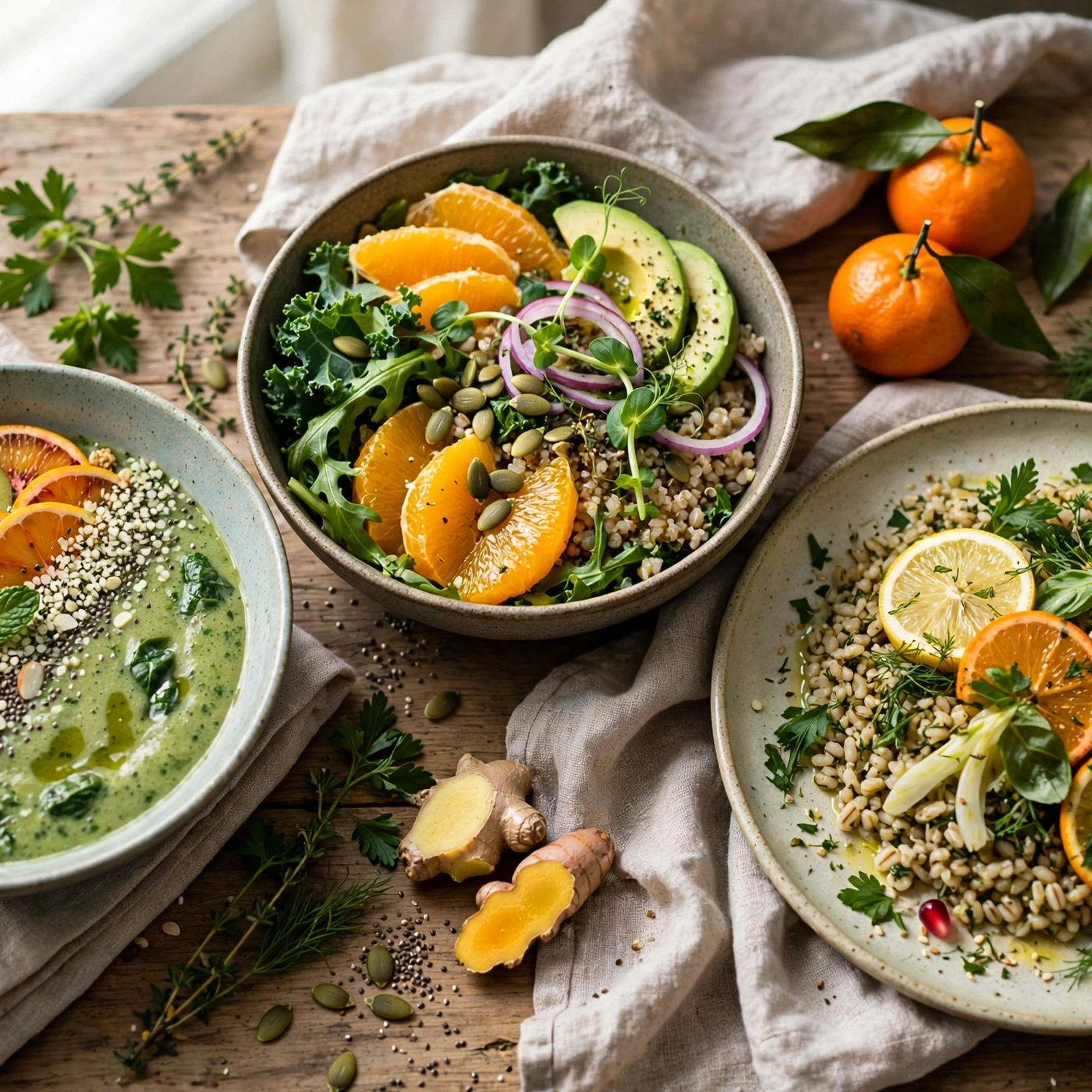
Best For
Setting up the next week, when you want a lighter day plus a quick pantry and fridge check.
Difficulty Level
Easy. Quick salads, a simple stir-fry, and a no-cook breakfast option.
Prep Time Category
Quick to moderate. Most meals take 20 minutes or less.
Why You’ll Love It
Breakfast is yogurt with citrus segments, oats, and seeds, lunch is a cabbage, carrot, and chickpea salad with an orange dressing, and dinner is a chicken or tofu stir-fry with broccoli, peppers, and brown rice. The day feels fresh after a week of soups and roasts, and while dinner cooks you can note what to buy for next week, which makes Monday far easier.
Key Ingredients
- Chicken breast or firm tofu
- Broccoli
- Bell peppers
- Brown rice
- Cabbage and carrots
- Chickpeas
- Oranges
- Sesame seeds
Flavor Profile
Fresh, lemony, and crisp, with crunchy cabbage, juicy citrus, and a light ginger and soy-style stir-fry sauce.
Helpful Tip
Use the last 10 minutes of the week to write next week’s shopping list from what you actually used. It keeps the plan realistic instead of aspirational.
Which Meal Plan Day Should You Try First?
If you only try one day, start with Day 1 or Day 6. Day 1 is the cleanest fresh start, with simple flavors and a fish dinner that feels like a proper meal. Day 6 is the most useful, because one weekend pot of soup sets up several lunches. If budget is the main concern, start with Day 2, where oats, beans, and lentils carry the whole day at low cost.
Best Ingredients to Pair with January Meal Plan
Keep a few anchors on hand and the plan gets much easier: olive oil, lemons, garlic, ginger, canned beans, lentils, oats, quinoa or barley, frozen berries, nuts and seeds, and a rotating cast of winter vegetables. Fresh herbs, even just parsley, lift a soup or grain bowl more than any extra seasoning. Citrus is the winter ingredient that does the most work, brightening rich, roasted, and brothy dishes alike.
Meal Prep and Storage Tips
Cook grains in bulk twice a week and store them in airtight containers for up to four days. Soups and stews keep well for three to four days in the fridge and freeze beautifully for up to three months. Roasted vegetables are best within three days, and dressings keep separately for up to a week, which keeps salads crisp. Label frozen containers with the dish name and date so nothing gets lost at the back of the freezer.
Common Mistakes
The most common mistake is planning seven brand-new meals with seven different shopping lists. Repeat grains, proteins, and vegetables across days and the plan becomes affordable and doable. Another mistake is skipping protein at breakfast, which often leads to a late-morning crash and a rushed lunch. Finally, do not try to cook every meal fresh on a busy day: planned leftovers are part of the plan, not a failure of it.
People Also Ask
Many readers ask how strict a January meal plan needs to be, and the honest answer is that it does not need to be strict at all. A plan works when it gives you a default meal on a tired evening, not when it punishes a swapped dinner. Others ask about cost, and pantry-led days with beans, lentils, oats, and frozen vegetables keep the week affordable. Readers also ask about repeating meals, and repeating a favorite breakfast or lunch all week is a practical habit, not a boring one.
Frequently Asked Questions
Can I swap the fish in this meal plan?
Yes. Swap salmon for another fish you like, or use chicken, tofu, or extra beans. Keep the vegetables and whole grains the same and the day still works.
Do I have to follow the days in order?
No. The order is a suggestion, not a rule. Move the weekend batch-cooking day to any day you have more time, and shift the quicker days to busier days.
Is this plan suitable for a family?
Yes, with simple adjustments. Serve the same soups, roasts, and grain bowls, and let each person add extra bread, rice, or toppings to suit their appetite.
Can I repeat a day I liked?
Absolutely. Repeating a day you enjoyed makes shopping easier and cooking faster, since you already know the steps.
What should I drink with these meals?
Water is the simplest choice, and unsweetened tea or sparkling water with citrus also pairs well with these flavors.
More Healthy January Recipe Inspiration
If this week worked for you, keep the momentum with longer plans and faster prep ideas that use the same pantry and produce.
- 7-Day Anti Inflammatory Meal Plan for Beginners
- 7 Days Anti Inflammatory Meal Plan with Breakfast, Lunch & Dinner
- How to Prep a Week of Anti-Inflammatory Dinners in One Hour
Conclusion
This seven-day plan is not about perfection. It is about giving January a shape: regular meals, plenty of vegetables, whole grains, and protein at each meal, cooked in ways that fit a real winter week. Pick a starting day, cook one pot of soup, roast one extra tray of vegetables, and let the leftovers carry you. Small, steady habits like that are what turn a January plan into an eating pattern you can actually keep.